



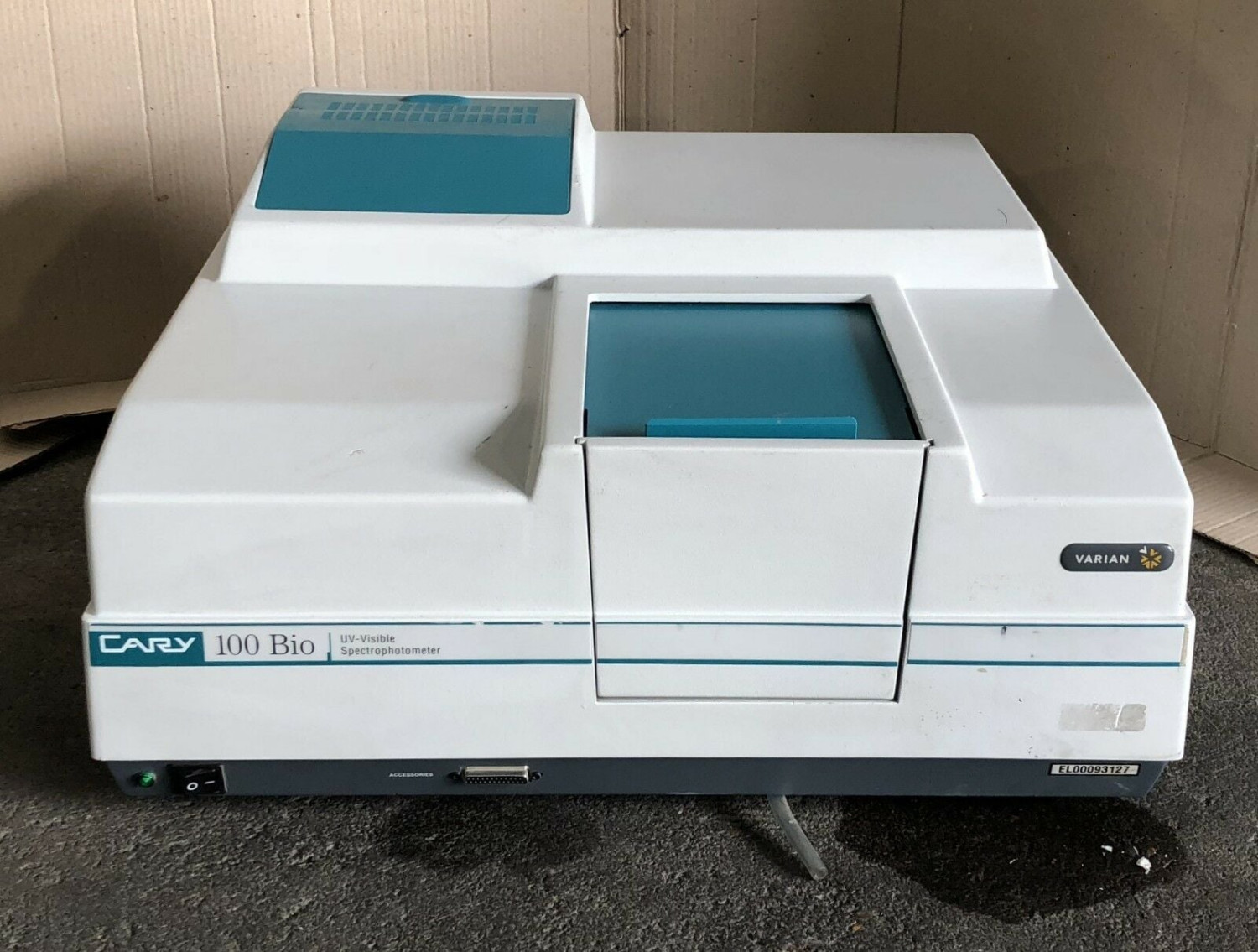
The Comprehensive Guide to UV Vis Spectrophotometry: Principles, Applications, and Choosing the Right Instrument
In
the vast and intricate world of analytical chemistry, few instruments are as
ubiquitous and fundamentally important as the UV Vis Spectrophotometer. This
powerful tool is the silent workhorse behind countless discoveries, quality
control checks, and research breakthroughs. From ensuring the purity of your
drinking water to developing life-saving pharmaceuticals, the applications of
this technology are virtually limitless.
But what exactly is a UV Vis Spectrophotometer, how does it work, and what should you consider when selecting one for your laboratory? This comprehensive guide will illuminate the principles behind this essential instrument, explore its wide-ranging applications, and provide a framework for making an informed investment in your lab's capabilities.
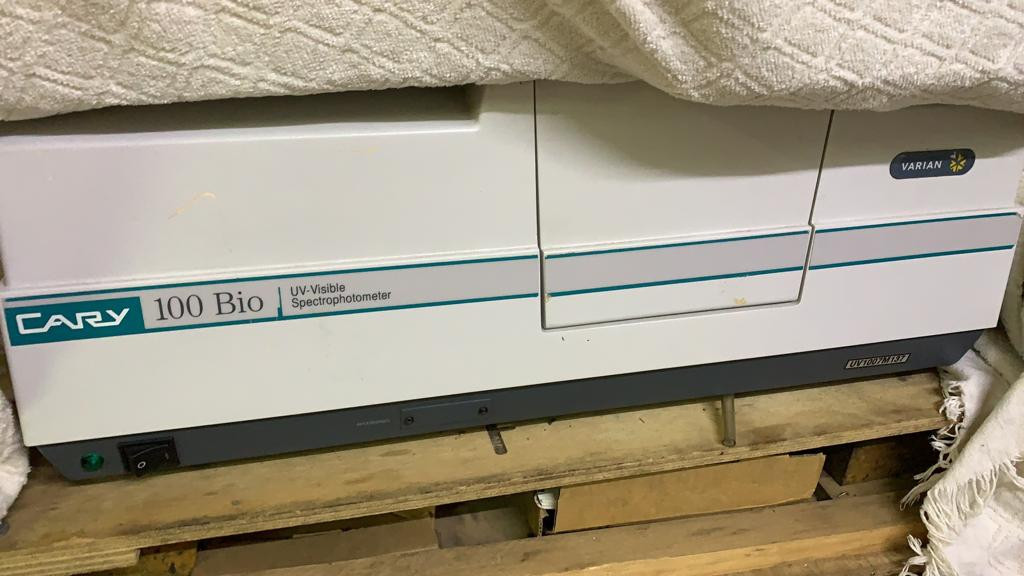
Discover the Cary UV1007M137 UV Vis Spectrophotometer Here!
Understanding
the Core Principle: The Interaction of Light and Matter
At its heart, a spectrophotometer operates on a
beautifully simple principle: molecules interact with light in specific and
measurable ways. The term "UV Vis" stands for Ultraviolet-Visible,
referring to the range of light wavelengths the instrument uses, typically from
about 190 to 1100 nanometers (nm).
The fundamental process is called Spectrophotometry,
and it involves measuring how much light a sample absorbs. When a beam of light
passes through a sample solution, molecules within that sample can absorb
specific wavelengths of light. The remaining, unabsorbed light passes through
and is detected.
The key measurement is Absorbance
(A), which is calculated using the Beer-Lambert Law. This law
states that the absorbance of a solution is directly proportional to the
concentration of the absorbing species and the path length the light travels
through the sample. In simple terms, the more concentrated a solution is, the
more light it will absorb. This direct relationship is what makes the UV Vis
spectrophotometer such a powerful tool for determining the
concentration of unknown samples.
Deconstructing
the Instrument: Key Components
A modern UV Vis spectrophotometer, while
sophisticated, is built around a logical sequence of components:
1.
Light Source: The instrument typically uses two lamps: a Deuterium lamp
for the ultraviolet range and a Tungsten or Halogen lamp for the visible range.
The system seamlessly switches between them to cover the full spectrum.
2.
Monochromator: This critical component acts like a precision filter. It
takes the broad-spectrum light from the source and splits it into specific,
individual wavelengths. A diffraction grating is used to select the exact
wavelength that will pass through to the sample.
3.
Cuvette Holder: The sample, usually dissolved in a solvent, is placed in a
transparent container called a cuvette. The cuvette holder positions this
sample precisely in the path of the monochromatic light beam. Cuvettes are
commonly made of glass (for visible light) or quartz (for UV light, as glass
absorbs UV radiation).
4.
Detector: After the light passes through the sample, the detector
measures its intensity. Modern instruments use sophisticated detectors like
photodiodes or photomultiplier tubes to convert the light signal into an
electrical signal.
5.
Processor and
Software: The electrical signal from the detector is
sent to a computer or built-in processor. The software then calculates and
displays the absorbance (or transmittance) value, allowing for data analysis,
graphing, and storage.
A
Universe of Applications: Where is UV Vis Spectroscopy Used?
The versatility of UV Vis spectrophotometry is
staggering. It is a foundational technique in nearly every scientific and
industrial field that involves chemical analysis.
·
Pharmaceutical
Industry: This is one of the largest application areas.
It is used for drug discovery, quantifying active pharmaceutical ingredients
(APIs), testing for impurities, and ensuring tablet and capsule consistency.
·
Environmental
Monitoring: Agencies use it to monitor water quality by
measuring concentrations of nitrates, phosphates, heavy metals, and organic
pollutants, ensuring compliance with environmental safety standards.
·
Biotechnology and
Life Sciences: Perhaps the most famous application is the
quantification of nucleic acids (DNA and RNA) and proteins. Researchers
routinely use a UV Vis spectrophotometer to check the
concentration and purity of their samples before critical experiments like PCR
or sequencing.
·
Food and Beverage
Quality Control: From checking the concentration of additives
and preservatives to ensuring the correct color of a soft drink or beer, UV Vis
is essential for maintaining product consistency and safety.
·
Academic and
Research Institutions: It serves as a
fundamental teaching tool in undergraduate chemistry and biology labs, helping
students grasp the concepts of quantitative analysis and molecular interaction.
Critical
Factors When Selecting a UV Vis Spectrophotometer
Investing in a new instrument is a significant decision.
The right choice depends heavily on your specific application requirements,
workload, and budget. Here are the key parameters to evaluate:
·
Spectral Bandwidth
(SBW): This refers to the narrowness of the
wavelength band selected by the monochromator. A smaller SBW provides higher
resolution, which is crucial for applications involving sharp spectral peaks or
complex mixtures.
·
Wavelength Range: Ensure the instrument covers the entire range you need.
For standard nucleic acid and protein work, 190-1100 nm is standard. Some
specialized applications may require extended ranges.
·
Beam Configuration: Instruments come in Single Beam or Double Beam designs.
Single beam instruments are simpler and more cost-effective, using one light
path. Double beam instruments split the light, sending one beam through the
sample and another through a reference blank simultaneously. This design
compensates for source drift and offers superior stability and accuracy, which
is vital for demanding applications and high-throughput labs.
·
Software and
Connectivity: Modern instruments are driven by software.
Look for intuitive, feature-rich software that allows for easy method creation,
data management, and compliance features like audit trails and user management.
Connectivity options like USB and Ethernet are now standard.
·
Performance
Validation: Check the instrument's specifications for key
performance metrics like wavelength accuracy, photometric accuracy, and stray
light levels. These define the ultimate quality and reliability of your data.
For laboratories seeking a robust and reliable
solution that balances performance with ease of use, the Cary UV1007M137
Spectrophotometer represents a compelling
option. Engineered with precision, it is designed to deliver the accurate and
reproducible results that modern laboratories depend on for their critical
analyses. Its design prioritizes user-friendly operation without compromising on
the analytical performance needed for a wide array of applications, from
routine quality control to advanced research and development.
Conclusion:
An Indispensable Tool for Modern Science
The UV Vis spectrophotometer remains a cornerstone of analytical science because of its direct principle, robust methodology, and incredible adaptability. Understanding its operation and capabilities is the first step for any scientist or lab manager. By carefully considering your needs against the key performance features of available instruments, you can select a spectrophotometer that will serve as a reliable partner in discovery, quality assurance, and innovation for years to come. Whether in a university classroom or a high-stakes industrial lab, this technology continues to be a fundamental pillar upon which scientific progress is built.


Ekracargo.com - Your trusted partner in industrial efficiency, providing a wide range of premium quality spare parts at competitive prices.
Contact Info
- Address: House 54 | Road 14 | Sector 14 | Uttara | Dhaka 1230 | Bangladesh
- Phone: Contact: +8801634736139 (WhatsApp) ,+8801789394669 (WhatsApp)
- Email: info@ekracargo.com