





Understanding Ultrasound Transducer Types: A Comprehensive Guide
Ultrasound technology plays a
crucial role in modern medical imaging, helping professionals diagnose and
monitor various conditions. One of the key components in this technology is the
ultrasound transducer, which converts electrical signals into sound
waves and vice versa. In this guide, we’ll explore different ultrasound
transducer types, their applications, and how they impact medical
diagnostics.
What
is an Ultrasound Transducer?
An ultrasound transducer, also known
as an ultrasound probe, is a device that emits high-frequency sound waves into
the body and receives echoes that form images of internal structures. These transducers
vary based on their frequency, shape, and function.
Common
Ultrasound Transducer Types
Understanding different ultrasound
transducer types is essential for selecting the right probe for specific
diagnostic needs. Below are the main types:
1.
Linear Transducers
- Frequency: High (7–18 MHz)
- Application: Vascular imaging, musculoskeletal exams,
small parts imaging (e.g., thyroid, breast)
- Provides high-resolution images with shallow
penetration
2.
Convex (Curvilinear) Transducers
- Frequency: Low (2–7 MHz)
- Application: Abdominal and obstetric imaging
- Offers a wider field of view with deeper penetration
3.
Phased Array Transducers
- Frequency: Low to mid-range (2–8 MHz)
- Application: Cardiac imaging (echocardiography)
- Designed for imaging between ribs with a small
footprint
4.
Endocavitary Transducers
- Frequency: Mid-range (5–9 MHz)
- Application: Obstetrics and gynecology (vaginal and
rectal exams)
- Provides high-resolution images of internal structures
5.
3D/4D Transducers
- Frequency: Varies
- Application: Obstetric imaging and fetal monitoring
- Captures real-time 3D and 4D images for detailed
visualization
Siemens
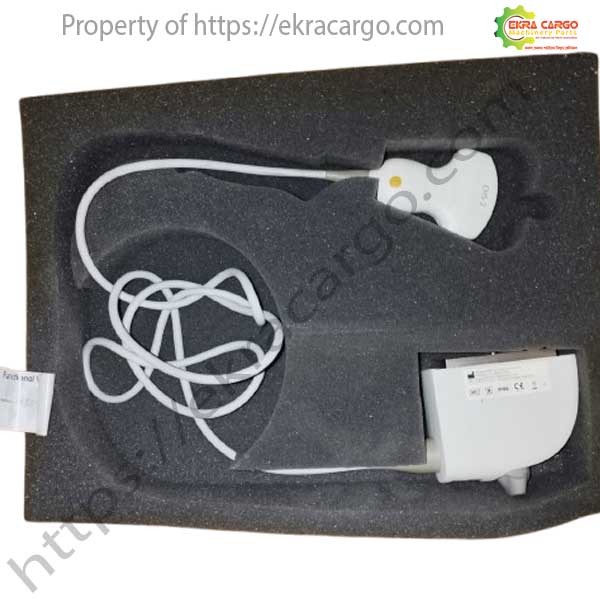
CH5-2 Ultrasound Transducer Probe
One of the widely used convex
transducers is the Siemens CH5-2 Ultrasound Transducer Probe.
This probe operates at a frequency range ideal for abdominal, obstetric, and
general imaging applications. With its curved array design, it provides
excellent depth penetration and high-quality imaging for accurate diagnoses.
How
to Choose the Right Ultrasound Transducer
When selecting an ultrasound
transducer, consider the following factors:
- Frequency:
Higher frequencies provide better resolution but shallower penetration,
while lower frequencies offer deeper imaging.
- Application:
Choose a transducer based on the area of the body being examined.
- Compatibility:
Ensure the probe is compatible with your ultrasound machine.
Conclusion
Selecting the right ultrasound
transducer types is crucial for obtaining accurate medical images. Whether
you need a linear, convex, or phased array probe, understanding their
applications will help in making the best choice. If you're looking for a
high-quality convex probe, check out the Siemens CH5-2 Ultrasound Transducer Probe for
reliable performance.
For more details on ultrasound
technology and different transducer types, visit this external resource to expand your knowledge.


Ekracargo.com - Your trusted partner in industrial efficiency, providing a wide range of premium quality spare parts at competitive prices.
Contact Info
- Address: House 54 | Road 14 | Sector 14 | Uttara | Dhaka 1230 | Bangladesh
- Phone: Contact: +8801634736139 (WhatsApp) ,+8801789394669 (WhatsApp)
- Email: info@ekracargo.com