




The Critical Role of Switchgear and Protection in Modern Power Systems
In the vast, interconnected web of our modern electrical
grid, from generation plants to the outlets in our homes and factories, one
principle reigns supreme: reliability is non-negotiable. Power interruptions
can lead to astronomical financial losses, compromised safety, and halted
critical services. At the heart of ensuring this unwavering reliability,
especially in medium voltage (MV) applications that power our industries,
campuses, and cities, lies a sophisticated and vital duo: switchgear
and protection.
This article will explore the fundamental functions of these systems, their key components, and why selecting the right equipment is paramount for any operation. We will also examine a specific industry-standard solution that embodies these principles.
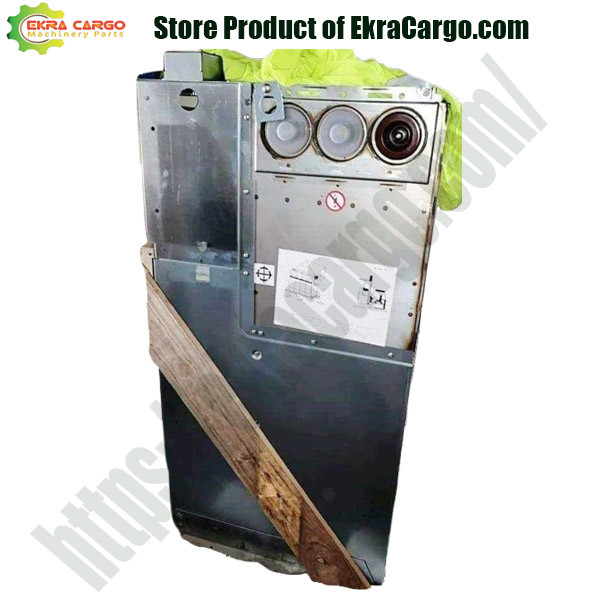
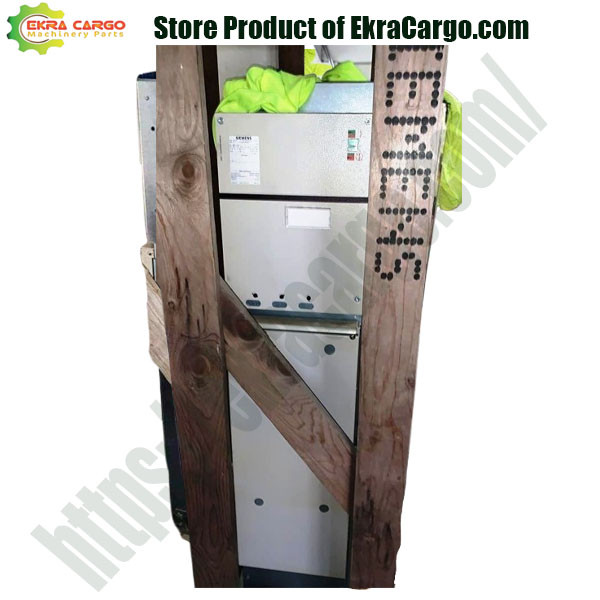
Explore the Siemens 8DJH Medium Voltage Switchgear Now
Understanding the Core Functions: More Than Just Switching
At its simplest,
switchgear is a combination of electrical disconnect switches, fuses, and
circuit breakers used to control, protect, and isolate electrical equipment.
Think of it as the command center of a power distribution network. However, its
role is far more nuanced than simply turning power on and off.
1. Control: Switchgear allows operators to
de-energize equipment for maintenance or to reconfigure a power system for
optimal performance. This provides the flexibility needed to manage complex
electrical loads safely.
2. Isolation: Once a circuit is de-energized, it
is crucial to physically isolate it from live parts. Isolating switches within
the switchgear create a visible break, ensuring the safety of personnel
performing maintenance—a fundamental principle known as Lockout/Tagout (LOTO).
3. Protection: This is the most critical
function. The "protection" aspect refers
to the system's ability to automatically detect abnormal conditions, such as
short circuits, overloads, or earth faults, and to react instantaneously. When
a fault occurs, the protection relays within the switchgear command the circuit
breakers to open, disconnecting the faulty section from the healthy network.
This action is what prevents catastrophic equipment damage, minimizes outage
areas, and mitigates the risk of fire and electrical hazards.
Key Components of a Switchgear and Protection Assembly
A typical medium
voltage switchgear assembly is a marvel of engineering, integrating several key
components:
·
Circuit Breakers: These are the workhorses that interrupt the current flow
during a fault. In MV applications, vacuum or SF6 circuit breakers are common
due to their excellent arc-quenching properties.
·
Protection Relays: These are the intelligent brains of the operation. Modern
digital relays continuously monitor electrical parameters like current,
voltage, and frequency. They are programmed with specific settings to
distinguish between normal operational surges and dangerous fault conditions,
triggering the breaker at the precise moment.
·
Current and Voltage Transformers (CTs & VTs): These devices act as the senses of
the system. They step down high currents and voltages to standardized,
low-level values that can be safely and accurately measured by the protection
relays.
·
Busbars: These are robust copper or aluminum bars that conduct
electrical power within the switchgear assembly, connecting the various
incoming and outgoing circuits.
·
Enclosure: The entire assembly is housed in a robust, grounded metal
enclosure, often compartmentalized to enhance safety, contain any potential
internal arcs, and protect the components from environmental factors.
The Consequences of Inadequate Protection
The failure to
invest in robust switchgear and protection systems
can have severe repercussions. Beyond the immediate tripping of a circuit,
inadequate protection can lead to:
·
Cascading Failures: A fault that is not isolated quickly can propagate through
the network, causing a widespread blackout.
·
Equipment Destruction: Transformers, motors, and cables can be irreparably
damaged by the immense thermal and mechanical stresses of sustained fault
currents.
·
Fire Hazards: Electrical faults generate extreme heat and arcs, which
are a primary ignition source for industrial fires.
·
Safety Risks: The most grave consequence is the threat to human life
from electrical explosions, arcs, and shock.
A Benchmark in Reliability: The Siemens 8DJH Medium Voltage
Switchgear
When selecting
equipment that meets the highest standards of performance and safety, industry leaders
often turn to proven designs. A prime example of such engineering excellence is
the Siemens 8DJH Medium Voltage Switchgear.
This switchgear
is designed for secondary distribution systems up to 24kV and is renowned for
its reliability and safety. The 8DJH model exemplifies the perfect synergy
between durable switching technology and integrated protection features. It is
a type-tested, air-insulated switchgear that is often favored for its compact
design and minimal maintenance requirements.
Key features
that make it a standout choice include:
·
Fixed-Mounted, Vacuum-Based Design: Utilizing vacuum circuit breakers
or load switches for exceptional switching performance and long service life.
·
Safe and Secure Operation: A comprehensive interlocking
system ensures that all operations are performed in the correct, safe sequence,
preventing operator error.
·
Internal Arc Compliance: Designed to withstand and contain internal arc
faults, channeling the immense pressure and flames away from personnel, thereby
significantly enhancing safety.
·
Versatility: It is suitable for a wide range of applications, including
transformer and cable feeder applications, and can be used in ring main units,
making it ideal for utility, industrial, and large commercial power
distribution.
For those
seeking a detailed look at the specifications and availability of this specific
unit, you can find more information here: Explore the Siemens 8DJH
Medium Voltage Switchgear for your project.
Conclusion: An Investment in Safety and Uptime
In conclusion, the intricate dance between switchgear and protection is what keeps our modern electrical world safe, stable, and efficient. It is not an area for compromise. Choosing the right system—one with a proven track record, robust construction, and advanced protective relays—is a direct investment in the continuity of your operations, the longevity of your assets, and, most importantly, the safety of your people. By understanding the critical functions these systems perform and selecting equipment from reputable manufacturers, you lay a solid foundation for a resilient and reliable power infrastructure.


Ekracargo.com - Your trusted partner in industrial efficiency, providing a wide range of premium quality spare parts at competitive prices.
Contact Info
- Address: House 54 | Road 14 | Sector 14 | Uttara | Dhaka 1230 | Bangladesh
- Phone: Contact: +8801634736139 (WhatsApp) ,+8801789394669 (WhatsApp)
- Email: info@ekracargo.com