




Servo Motor Working Principle–Everything You Need to Know Before Buying | Best Rates | Buying Guide | Detailed Tips | Maintenance | FAQ |
Servo Motor Working Principle – Everything You Need to Know Before Buying
Servo motors are the backbone of many automation systems. From industrial machines to robotics, CNC systems to home appliances, servo motors deliver unmatched precision and control. If you’re planning to buy one or simply want to understand how a servo motor works, this comprehensive blog will walk you through its working principle, types, benefits, product recommendations, and a helpful buying guide.
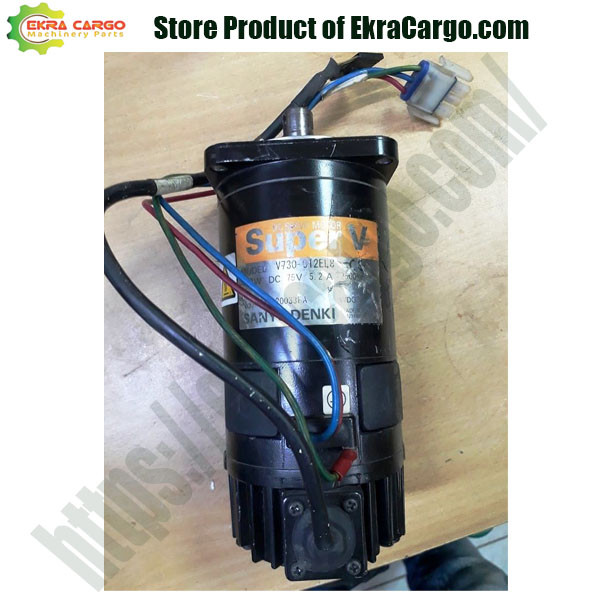
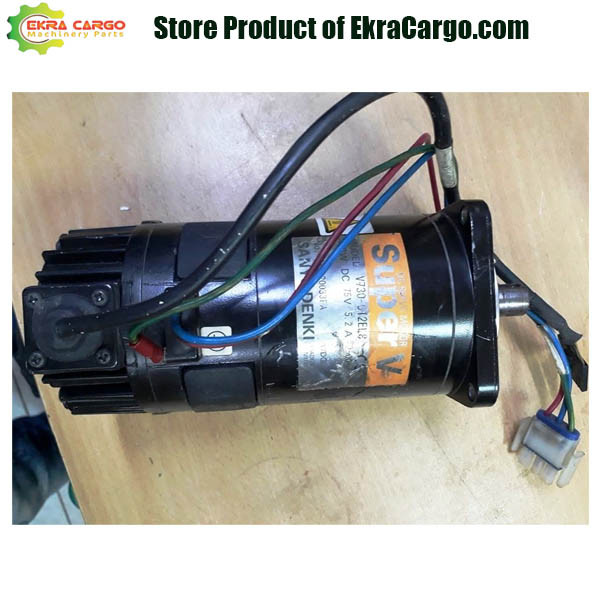
Check the product at Ekra Cargo
What is a Servo Motor?
A servo motor
is a type of rotary or linear actuator that enables precise control of angular
or linear position, velocity, and acceleration. It includes a suitable motor
coupled to a sensor for position feedback. Servo motors are widely used in:
- Industrial
automation
- Robotics
- CNC
machinery
- Camera auto
focus
- Conveyor
systems
Working Principle of Servo Motor
At the heart of a
servo motor lies a closed-loop control system. Here’s how it works
step-by-step:
1.
Input
Signal (Command):
A desired position or movement is sent to the servo via a signal, typically in
the form of a PWM (Pulse Width Modulation).
2.
Controller
Action: The controller
receives this input and compares it with feedback from a position sensor (often
a rotary encoder or potentiometer).
3.
Error
Detection:
If there’s a difference between the current position and desired position, an
error signal is generated.
4.
Motor
Activation:
The motor is activated to reduce the error by adjusting its shaft to the
correct position.
5.
Feedback
Loop: Once the
position is achieved, the feedback loop ensures the motor maintains that
position even under external load.
This real-time
correction loop enables servo motors to achieve high accuracy and
repeatability, making them perfect for applications that demand precision.
Types of Servo Motors
There are
primarily three types of servo motors:
1. AC Servo Motor
- Powerful and
reliable
- High
efficiency
- Preferred
for industrial and heavy-duty applications
2. DC Servo Motor
- Simple
design
- Easy to
control
- Commonly
used in small robotic systems and hobby electronics
3. Brushless DC (BLDC) Servo Motor
- High
torque-to-weight ratio
- Long
lifespan (no brushes to wear out)
- Low
maintenance
Each type has its
own unique benefits depending on the application.
Applications of Servo Motors
Servo motors are
everywhere. Here are some common use-cases:
- CNC
Machines:
For precise cutting, milling, and shaping
- Robotics: For
articulated joints and motion control
- Drones and
RC Vehicles:
For steering and stabilization
- 3D Printers: For axis
movement
- Textile
Machinery:
For pattern and speed control
- Conveyor
Belts:
For controlled motion and stopping
Top Servo Motor Product Recommendations
✅ 1. MG996R Metal Gear Servo Motor
Best
for: Hobby projects,
RC cars, robotic arms
- Torque: 10 kg/cm
- Operating
Voltage:
4.8V – 7.2V
- Pros:
- Durable
metal gear
- Affordable
- Compatible
with Arduino
- Cons:
- Limited for
industrial use
- No built-in
encoder
✅ 2. Futaba S3003 Standard Servo
Best
for: Beginners, model
aircrafts
- Torque: 3.2 kg/cm
- Voltage: 4.8 – 6.0V
- Pros:
- Easy to
install
- Reliable
and beginner-friendly
- Cons:
- Lower
torque
- Not
suitable for heavy loads
✅ 3. Panasonic A5 Series Servo Motor
(Industrial)
Best
for: Industrial CNC
and automation
- Power: Up to 750W
- Control: RS232,
pulse train
- Pros:
- High-speed
positioning
- Built-in
safety features
- Excellent
feedback loop
- Cons:
- Expensive
- Requires
proper setup and software
✅ 4. Dynamixel XM540-W270-R Smart Servo
Best
for: Robotics and
research
- Features: Smart
interface, position/velocity/torque control
- Pros:
- Advanced
programmable interface
- Integrated
feedback and sensors
- Cons:
- Pricey
- Overkill
for basic users
Pros and Cons of Using Servo Motors
✅ Pros:
- Precise
control of position and speed
- High
efficiency and performance
- Compact and
lightweight
- Available in
various sizes and torque ranges
- Useful in
both analog and digital applications
❌ Cons:
- More
expensive than stepper motors
- Requires
complex control circuitry
- Can overheat
under high continuous loads
- May need
tuning for specific applications
Servo Motor Buying Guide
If you’re ready
to buy a servo motor, consider the following key factors:
1. Torque Requirements
Evaluate how much
torque is needed for your application. For example, robotic arms require higher
torque than a simple RC car.
2. Voltage and Power Supply
Ensure your power
source matches the servo’s operating voltage (5V, 6V, 12V, etc.).
3. Feedback Mechanism
Choose between
analog or digital feedback. For precision, a digital servo with encoder
feedback is better.
4. Motor Type
Decide between
AC, DC, or brushless depending on whether you need high power, compact size, or
long durability.
5. Control Interface
Check if your
controller (Arduino, PLC, etc.) supports the servo's communication protocol.
6. Duty Cycle
Some motors are
designed for continuous rotation; others are limited to 180° or 270°.
7. Environment
If the motor is
exposed to moisture or dust, select a sealed or industrial-grade unit.
Frequently Asked Questions (FAQs)
Q1. What is the difference between a servo
motor and a stepper motor?
A servo motor
uses a closed-loop system with feedback for precise positioning. A stepper
motor operates in open-loop mode and lacks self-correction.
Q2. Can servo motors run continuously?
Yes, continuous
rotation servos are designed for full 360° motion, often used in conveyor
systems.
Q3. Do servo motors need drivers?
Yes, servo motors
require servo drivers or controllers to interpret input signals and
manage feedback.
Q4. How do I control a servo motor with
Arduino?
Use the Servo.h
library, connect signal pin to PWM-enabled Arduino pin, and use functions
like servo.write(angle);.
Q5. How long do servo motors last?
Lifespan varies,
but brushless servo motors can last over 10,000 hours under optimal
conditions.
Final Thoughts
Servo motors are
an essential component in modern automation, robotics, and electronics.
Understanding the working principle of servo motors is crucial before
purchasing one for your project. Whether you're a hobbyist or an industrial
buyer, selecting the right motor involves evaluating torque, control system,
environment, and feedback requirements.
We recommend starting with hobby-friendly options like the MG996R or Futaba S3003, and moving to industrial-grade models like Panasonic A5 if your use-case demands it.


Ekracargo.com - Your trusted partner in industrial efficiency, providing a wide range of premium quality spare parts at competitive prices.
Contact Info
- Address: House 54 | Road 14 | Sector 14 | Uttara | Dhaka 1230 | Bangladesh
- Phone: Contact: +8801634736139 (WhatsApp) ,+8801789394669 (WhatsApp)
- Email: info@ekracargo.com