



Servo Motor vs Stepper Motor: Which One Should You Choose? | Best Rates | Buying Guide | Detailed Tips | Maintenance | FAQ |
Servo Motor vs Stepper Motor: Which One Should You Choose?
Choosing between
a servo motor and a stepper motor can be confusing, especially if
you're working on a robotics, CNC, automation, or Arduino-based project. Both
motors have unique advantages and disadvantages depending on the application.
In this detailed blog, we’ll compare servo motors and stepper motors side by side, explain how each works, highlight their use cases, and recommend products that suit your needs. Whether you're a hobbyist or an industrial automation expert, this guide will help you make an informed buying decision.
Check the product at Ekra Cargo
Table of Contents
1.
What
is a Stepper Motor?
2.
What
is a Servo Motor?
3.
Key
Differences Between Stepper Motor and Servo Motor
4.
Pros
and Cons
5.
Applications
and Use Cases
6.
Product
Recommendations
7.
Buying
Guide: How to Choose the Right Motor
8.
Frequently
Asked Questions (FAQs)
9.
Final
Thoughts
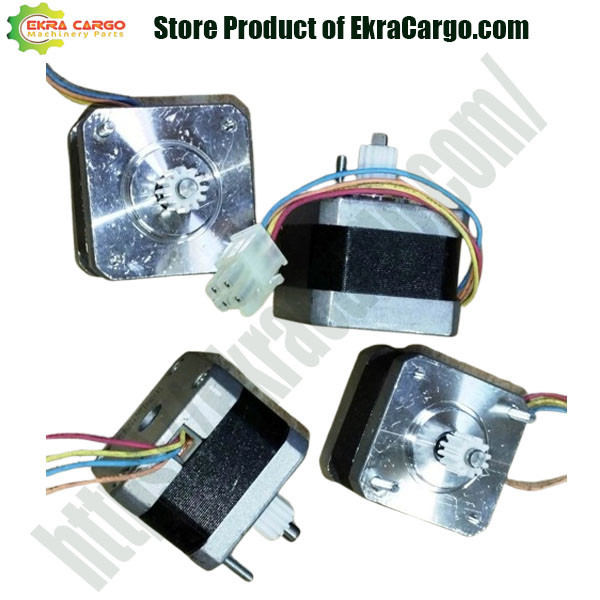
1. What is a Stepper Motor?
A stepper
motor is an electromechanical device that divides a full rotation into a
large number of equal steps. It moves in discrete steps, meaning it can
precisely control position without needing feedback systems.
How
it works: A controller
sends electrical pulses to the motor driver, which powers the motor coils to
move the shaft incrementally.
Common Features:
- Precise
position control
- Open-loop
control (no feedback)
- High holding
torque
- Low to
medium speed operations
2. What is a Servo Motor?
A servo motor
is a rotary actuator or linear actuator that allows for precise control of
angular or linear position, velocity, and acceleration. It includes a feedback
system, usually a rotary encoder, that continuously monitors its position.
How
it works: The controller
compares the target position with the actual position (feedback) and adjusts
accordingly to reduce error.
Common Features:
- High
precision and accuracy
- Closed-loop
control (feedback included)
- Suitable for
high-speed and dynamic applications
- Smooth
motion
3. Key Differences: Servo Motor vs Stepper
Motor
|
Feature |
Stepper Motor |
Servo Motor |
|
Control Type |
Open-loop |
Closed-loop |
|
Position
Accuracy |
Good (limited
by step size) |
Excellent (with
feedback) |
|
Torque at High
Speed |
Decreases |
Maintains
better torque |
|
Cost |
Generally
cheaper |
More expensive |
|
Heat Generation |
Runs hot |
More efficient |
|
Complexity |
Easier to
implement |
More complex |
|
Applications |
3D printers,
CNC, hobby projects |
Robotics,
industrial automation |
4. Pros and Cons
✅ Stepper Motor – Pros:
- Cost-effective
- Simple to
implement
- Good torque
at low speeds
- No need for
feedback or tuning
❌ Stepper Motor – Cons:
- Loses torque
at high speeds
- Prone to
resonance
- Can miss
steps if overloaded
- Less
efficient
✅ Servo Motor – Pros:
- High
performance and efficiency
- Maintains
torque at high speeds
- Accurate
with closed-loop feedback
- Smooth,
precise motion
❌ Servo Motor – Cons:
- More
expensive
- Requires
tuning
- Complex
setup
5. Applications and Use Cases
Stepper Motor Applications:
- 3D Printers
- Laser
Cutters
- Small CNC
machines
- Surveillance
Cameras (pan/tilt)
⚙️ Servo Motor Applications:
- Robotic Arms
- Industrial
Automation
- Conveyor
Belts
- Drones and
UAVs
- High-end CNC
Machines
6. Product Recommendations
Recommended Servo Motor for Arduino
Projects:
EKRA
Digital Servo Motor MG996R (High Torque Metal Gear)
- Voltage: 4.8–7.2V
- Torque: Up to
13kg.cm
- Rotation
Angle:
180°
- Ideal for: Robotics,
RC Cars, Arduino Projects
Pros:
- High torque
for heavier loads
- Metal gears
ensure durability
- Compatible
with Arduino and Raspberry Pi
Cons:
- Slightly
noisy under full load
- Requires
external power source
Recommended Stepper Motor for DIY
CNC:
NEMA
17 Stepper Motor (42BYGHW208)
- Voltage: 2.8V
- Holding
Torque:
4.2 kg.cm
- Steps: 200
steps/rev
- Ideal for: 3D
Printers, CNC machines, Laser engravers
Pros:
- Reliable and
budget-friendly
- Easy to
integrate with most drivers
- Accurate
step positioning
Cons:
- Heat buildup
during prolonged use
- Less torque
at high RPM
7. Buying Guide: How to Choose the Right Motor
Here are key
factors to consider before purchasing:
⚡ 1. Application Type
- Lightweight
tasks (e.g., 3D printing): Stepper motors are sufficient.
- High-precision
or dynamic tasks (e.g., robotic arms): Go with servo motors.
⚙️ 2. Torque and Speed
- Stepper
motors offer better torque at lower speeds.
- Servo motors
excel in high-speed, high-load environments.
3. Budget
- Tight
budget? Stepper motors are more economical.
- Budget for
performance? Invest in servo motors.
4. Feedback Requirement
- If you need
real-time position feedback, servo is the only choice.
5. Power Consumption
- Servo motors
are more power-efficient.
- Stepper
motors draw constant current, even when idle.
8. Frequently Asked Questions (FAQs)
❓ Q: Can I use a stepper motor instead
of a servo motor?
A: Yes, but only for low-load
applications where high precision or speed isn’t necessary.
❓ Q: Which is more durable, a stepper
or servo motor?
A: Servo motors generally last longer
due to better heat management and efficiency.
❓ Q: Are servo motors better for
robotics?
A: Absolutely. Their closed-loop
feedback and smooth control make them ideal for complex robotic movements.
❓ Q: Are stepper motors easier to use
with Arduino?
A: Yes, they require less setup and no feedback system, making them beginner-friendly.
9. Final Thoughts
Choosing between
a servo motor and a stepper motor depends on your project needs, budget,
and performance expectations. Stepper motors are excellent for precise,
low-speed, low-cost projects, while servo motors shine in high-speed,
high-accuracy, and dynamic systems.
If you're working
on an Arduino-based robotic arm, drone control, or advanced automation
setup, servo motors offer the best performance and reliability.
✅ Ready to Buy a Servo Motor?
Check out our
high-torque digital servo motors, ideal for robotics, automation, and
Arduino projects:
Buy Servo Motor Now – EKRA Cargo Store
Enhance your projects with precise motion control. Fast shipping, affordable prices, and expert support!


Ekracargo.com - Your trusted partner in industrial efficiency, providing a wide range of premium quality spare parts at competitive prices.
Contact Info
- Address: House 54 | Road 14 | Sector 14 | Uttara | Dhaka 1230 | Bangladesh
- Phone: Contact: +8801634736139 (WhatsApp) ,+8801789394669 (WhatsApp)
- Email: info@ekracargo.com