




The Ultimate Guide to Servo Drive Price: Key Factors and Smart Investment
In the world of industrial automation, precision,
reliability, and efficiency are paramount. At the heart of many
high-performance motion control systems lies a critical component: the servo
drive. Whether you're upgrading an existing production line or designing a new
machine from the ground up, one of the most pressing questions is inevitably
about the servo drive price.
The cost of a
servo drive is not a single number pulled from a hat. It's a reflection of a
complex interplay of technology, performance, and durability. A surprisingly
low price might signal compromised quality or missing features that lead to costly
downtime, while a premium price tag should be justified by tangible benefits
for your specific application.
This in-depth
guide will walk you through the primary factors that influence servo drive
pricing. By understanding these elements, you can move beyond sticker shock and
make an informed, cost-effective decision that balances your budget with your
operational requirements.
1. Power Rating and Performance Capabilities
The most
fundamental factor affecting the cost of a servo drive is its power rating,
typically measured in kilowatts (kW) or kilovolt-amps (kVA). This defines the
amount of electrical power the drive can deliver to the servo motor.
·
Low-Power Drives: Drives with lower power ratings (e.g., below 1 kW) are
generally more affordable. They are suited for applications like small robotic
arms, precision pick-and-place units, or compact conveyor systems.
·
High-Power Drives: As the power requirement increases to handle larger loads,
higher torque, and faster speeds, the internal components—such as transistors
and heat sinks—must become more robust. This naturally increases the
manufacturing cost and, consequently, the servo drive price.
For heavy-duty applications like metal stamping presses, large CNC machines, or
industrial centrifuges, a high-power drive is a necessity.
For example, a
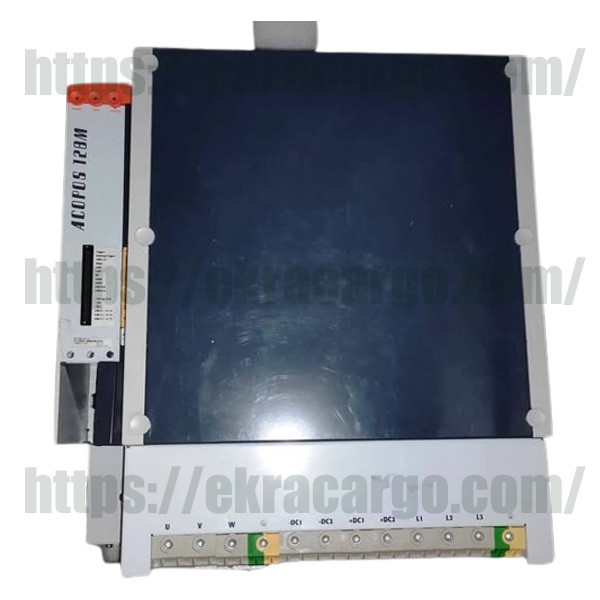
high-performance unit like the BR ACOPOS 128M Servo Drive
8V128M000-2 (98kVA) is engineered for demanding applications that
require substantial power and advanced control, which is reflected in its
investment value for the performance it delivers. You can view the
specifications for this powerful drive here.
2. Feature Set and Technological Sophistication
Not all servo
drives are created equal. The breadth and depth of their features play a
massive role in determining the price. Think of this as the difference between
a basic economy car and a high-performance luxury vehicle.
·
Basic Control Features: Entry-level drives offer fundamental control over
position, speed, and torque.
·
Advanced Features: Premium drives include:
o Advanced Communication Protocols: Integrated support for real-time
industrial networks like EtherCAT, PROFINET, or EtherNet/IP adds to the cost
but is essential for seamless integration into modern smart factories.
o Safety Features: Built-in Safety Torque Off (STO)
or Safe Stop Interval (SSI) are critical for protecting personnel and
equipment. These certified safety functions add complexity and value.
o High-Resolution Feedback Processing: The ability to process data from
high-end encoders ensures exceptional precision, which is crucial for
applications like semiconductor manufacturing or precision machining.
o Advanced Tuning and Diagnostics: Sophisticated software tools for
auto-tuning, vibration suppression, and detailed diagnostics help optimize
performance and reduce maintenance time.
3. Brand Reputation and Support
The
manufacturer's brand is a significant price determinant. Established brands with
a long history of reliability and innovation often command a higher price. This
premium isn't just for the name; it's for the peace of mind that comes with:
·
Proven Reliability: A track record of performance in harsh industrial
environments.
·
Global Technical Support: Access to expert help when you need it most.
·
Extensive Documentation: Comprehensive manuals, application notes, and
certifications.
·
Warranty and Service: Strong warranty policies and a reliable service
network.
Investing in a
reputable brand often translates to lower total cost of ownership due to
reduced failure rates and downtime.
4. Environmental Ratings and Build Quality
Where will the
drive be installed? The required level of protection against environmental
factors directly impacts the cost.
·
IP20 Rating: A standard rating for drives installed in protected
control cabinets. These are the most common and cost-effective.
·
IP65/IP67 Rating: Drives with these ratings are sealed against dust and
low-pressure water jets, allowing them to be installed directly on the machine
without a cabinet. This ruggedness requires specialized seals and housing,
increasing the price but offering greater design flexibility.
5. Supply Chain and Market Availability
Macroeconomic
factors and supply chain dynamics can cause fluctuations in servo drive prices.
Component shortages, raw material costs, and logistical challenges can all lead
to price increases and extended lead times. Sourcing from a reliable supplier
with a stable inventory is crucial for project planning and budget adherence.
6. New vs. Refurbished or Legacy Models
The market
offers alternatives to brand-new, latest-model drives.
·
New, Current Models: Carry the latest technology and full manufacturer warranty
at the highest price point.
·
Refurbished or Certified Renewed: These are used drives that have
been professionally tested, repaired, and certified to meet original
specifications. They offer a significant cost saving and can be an excellent
option for maintaining older machinery or stretching a tight budget.
·
Legacy or Obsolete Models: When a machine is built around a
specific drive that is no longer in production, finding a "New Old
Stock" unit can be expensive due to scarcity.
Making a Smart Investment: Balancing Cost and Value
Focusing solely
on the initial purchase price is a common mistake. A truly smart investment
considers the Total Cost of Ownership (TCO). A cheaper drive that fails
prematurely can cause production halts, leading to thousands of dollars in lost
revenue and urgent replacement costs that far exceed the initial
"savings."
Key
questions to ask before purchasing:
1. What are my application's exact
requirements? Don't
over-specify. Buy the drive that meets your performance needs without
unnecessary extras.
2. How critical is uptime? For a 24/7 operation, the
reliability offered by a premium drive is worth the investment.
3. What is the integration cost? A drive with poor support or
complex setup can incur high engineering costs.
For those
seeking a powerful and reliable solution for demanding automation tasks,
exploring well-engineered options is key. A prime example is the BR ACOPOS 128M Servo Drive
8V128M000-2, a unit designed to deliver high power and precision
where it matters most.
Conclusion
Understanding the factors behind servo drive pricing empowers you to make a confident purchasing decision. The cost is a direct function of power, features, brand assurance, and durability. By carefully evaluating your technical needs and considering the total cost of ownership rather than just the initial outlay, you can select a servo drive that offers the best long-term value, ensuring your automated systems run smoothly, efficiently, and profitably for years to come. Remember, in industrial automation, the right component is not an expense; it's an investment in your productivity and competitive edge.


Ekracargo.com - Your trusted partner in industrial efficiency, providing a wide range of premium quality spare parts at competitive prices.
Contact Info
- Address: House 54 | Road 14 | Sector 14 | Uttara | Dhaka 1230 | Bangladesh
- Phone: Contact: +8801634736139 (WhatsApp) ,+8801789394669 (WhatsApp)
- Email: info@ekracargo.com