





Seal Face The Key to Leak-Free Sealing | Best Rates | Buying Guide | Detailed Tips | Maintenance | FAQ |
Seal Face: The Key to Leak-Free Sealing
Seal faces play a critical role in
mechanical seals, ensuring that rotating equipment like pumps and compressors
stays leak-proof. Whether you're a maintenance professional or a curious
beginner, understanding seal faces is crucial for system reliability and
performance.
This guide will help you understand what seal faces are, how they work, which materials suit different conditions, and how to choose the right one.
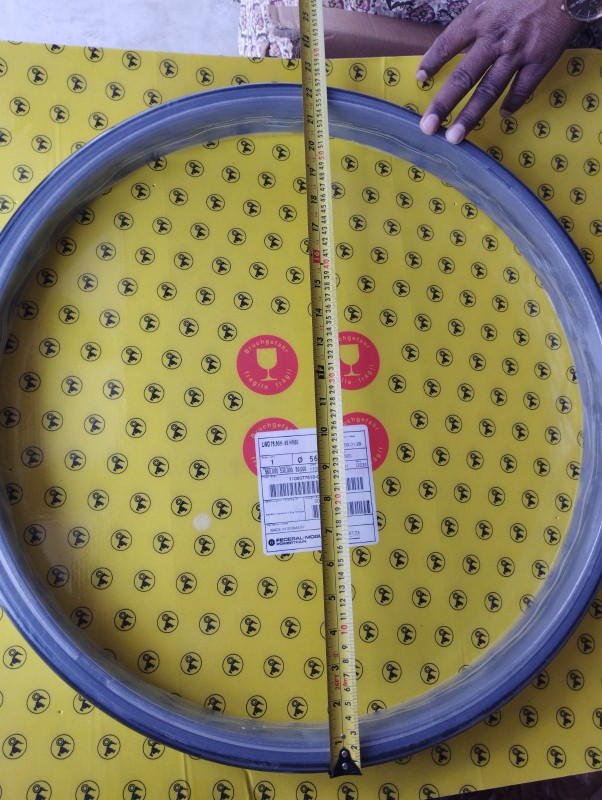
Check the product at Ekra Cargo
What
Is a Seal Face?
A seal face is the flat
surface on a mechanical seal that comes in contact with another surface to form
a tight seal. These faces are typically made from durable materials like
carbon, silicon carbide, tungsten carbide, or ceramic.
They are used in:
- Pumps
- Mixers
- Compressors
- Blowers
- Agitators
Why
Are Seal Faces Important?
Seal faces are essential because
they:
- Prevent fluid leakage
- Handle pressure and temperature extremes
- Reduce wear and friction
- Improve equipment longevity
Even a small defect in a seal face
can lead to system failure. That’s why choosing the right seal face is vital.
Types
of Seal Faces
There are several types of seal face
designs. Here are the most common:
1.
Stationary Seal Face
- Fixed in place
- Works with rotating seal ring
- Ideal for high-speed applications
2.
Rotating Seal Face
- Moves with the shaft
- Faces the stationary component
- Common in standard pump systems
3.
Balanced vs Unbalanced
- Balanced
seals reduce pressure across the seal face
- Unbalanced
seals are simpler and cheaper, but handle lower pressure
Popular
Seal Face Materials
The material you choose depends on
operating conditions.
|
Material |
Pros |
Cons |
|
Carbon |
Self-lubricating, cost-effective |
Wears faster in dirty environments |
|
Silicon Carbide |
Very hard, excellent in abrasives |
Brittle, expensive |
|
Tungsten Carbide |
Tough and wear-resistant |
Heavier, costly |
|
Ceramic |
Good chemical resistance |
Brittle under thermal shock |
How
to Choose the Right Seal Face
Consider the following before
buying:
✔
Application
- Know the fluid: Is it clean water, slurry, or oil?
- What is the temperature and pressure?
✔ Shaft
Speed
- High-speed applications need balanced seals with
durable faces.
✔
Environment
- Dusty or slurry-filled systems need hard materials like
tungsten carbide.
✔ Budget
- Don’t overspend on material that your system doesn’t
require.
Best
Seal Face Products to Buy
Here are some top-rated options
available online.
AES Seal Carbon Seal Face Ring
- Material:
Resin-impregnated carbon
- Pros:
- High compatibility with most pumps
- Good wear resistance
- Cons:
- Not ideal for abrasive environments
- Best For:
General-purpose use
John Crane Type 21 Silicon Carbide Seal Face
- Material:
Silicon carbide
- Pros:
- Excellent for harsh chemicals and abrasives
- Long life
- Cons:
- Expensive
- Best For:
Industrial and chemical plants
EagleBurgmann Tungsten Carbide Seal Face
- Material:
Tungsten carbide
- Pros:
- Very durable
- Withstands high pressure
- Cons:
- Heavier than other options
- Best For:
Slurry or oil-filled systems
Buying
Guide: Seal Face Checklist
Here’s a quick checklist to help you
make the right choice:
- ✅ Identify your application (water, oil, chemicals)
- ✅ Choose appropriate material (carbon, carbide,
ceramic)
- ✅ Match dimensions precisely
- ✅ Look for compatibility with your equipment brand
- ✅ Check for certifications (API, ISO)
My
Personal Experience
As a technician working in a water
treatment plant, I’ve dealt with all kinds of seal face materials. Carbon is
great for clean water systems—easy to install and affordable. However, we
switched to silicon carbide when treating corrosive water because carbon didn’t
hold up.
One tip: always check surface
flatness before installation. A warped seal face leads to immediate failure.
FAQs
About Seal Faces
What
causes seal face failure?
- Misalignment, dirt, thermal shock, or poor
installation.
Can
seal faces be reused?
- Rarely. They’re often too worn or damaged to reuse
safely.
What’s
the best seal face for chemical resistance?
- Silicon carbide or ceramic is best for resisting
chemicals.
How
do I clean a seal face?
- Use lint-free cloths and isopropyl alcohol. Avoid
abrasives.
Are
all seal faces interchangeable?
- No. You must match dimensions and specs carefully.
Conclusion
Seal faces are small components with
big responsibilities. Choosing the right one ensures your systems run
leak-free, safely, and efficiently. Whether you're maintaining a home water
pump or managing industrial equipment, understanding seal face materials,
types, and applications can save you time and money.
By using this guide and referring to our product picks, you’re well on your way to selecting the perfect seal face for your needs.


Ekracargo.com - Your trusted partner in industrial efficiency, providing a wide range of premium quality spare parts at competitive prices.
Contact Info
- Address: House 54 | Road 14 | Sector 14 | Uttara | Dhaka 1230 | Bangladesh
- Phone: Contact: +8801634736139 (WhatsApp) ,+8801789394669 (WhatsApp)
- Email: info@ekracargo.com