




Understanding Pressure Sensor Types: A Complete Buying Guide | Best Rates | Buying Guide | Detailed Tips | Maintenance | FAQ |
Understanding Pressure Sensor Types: A Complete Buying Guide
Introduction
to Pressure Sensors
Pressure
sensors are essential components in a wide range of industries, including
manufacturing, automotive, aerospace, HVAC, medical, and industrial automation.
Their core purpose is to detect pressure changes in gases or liquids and
convert these measurements into electrical signals for monitoring or control
systems.
Whether you're managing a factory, assembling smart home equipment, or designing industrial control systems, understanding the types of pressure sensors and their unique features can help you make an informed purchasing decision.
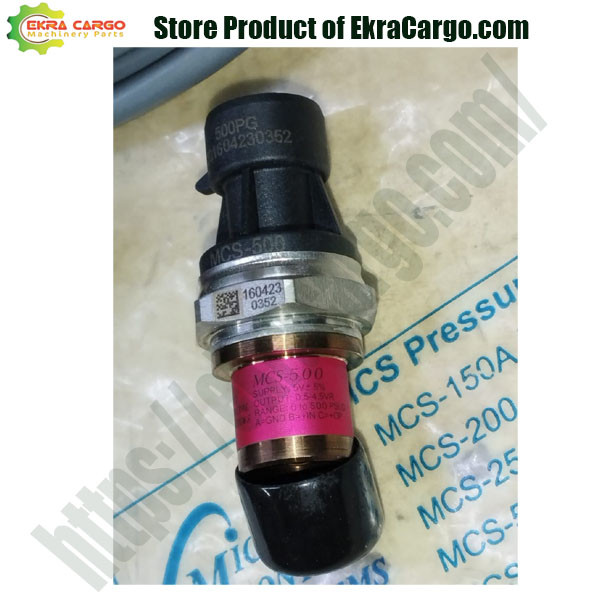
Check the product at Ekra Cargo
Types of Pressure Sensors
There are
several types of pressure sensors, each tailored to different applications.
Below are the most common types:
1. Absolute Pressure Sensors
Working Principle:
These sensors measure pressure relative to a perfect vacuum (zero pressure
reference). The vacuum chamber inside the sensor ensures accurate readings
regardless of atmospheric pressure changes.
Applications:
·
Aerospace systems
·
Altitude measurement
·
Vacuum packing machines
Pros:
·
High accuracy
·
Stable reference point
·
Ideal for scientific measurements
Cons:
·
Costly compared to other types
·
Sensitive to temperature variations
2. Gauge Pressure Sensors
Working Principle:
Gauge pressure sensors measure pressure relative to atmospheric pressure. These
are the most commonly used sensors in everyday applications.
Applications:
·
Tire pressure monitors
·
Industrial equipment
·
Water systems
Pros:
·
Economical
·
Widely used and supported
·
Easy to install
Cons:
·
Readings can vary with altitude
·
Less accurate in fluctuating atmospheric conditions
3. Differential Pressure Sensors
Working Principle:
These sensors measure the difference between two pressure points. They are
ideal for monitoring flow, level, or pressure drop in filters.
Applications:
·
HVAC systems
·
Liquid level detection
·
Airflow control
Pros:
·
High sensitivity
·
Great for process control systems
·
Measures both high and low pressure differences
Cons:
·
Complex setup
·
May require calibration
4. Sealed Pressure Sensors
Working Principle:
Similar to gauge sensors but calibrated against a fixed pressure instead of
atmospheric pressure. Often sealed with inert gas.
Applications:
·
Hydraulic systems
·
Marine applications
Pros:
·
Reliable in harsh environments
·
No impact from weather or altitude changes
Cons:
·
Limited flexibility
·
More expensive than gauge sensors
5. Vacuum Pressure Sensors
Working Principle:
Used to measure pressure lower than atmospheric levels, these sensors operate
in vacuum environments or low-pressure applications.
Applications:
·
Vacuum chambers
·
Semiconductor manufacturing
·
Laboratory use
Pros:
·
Specialized for negative pressure
·
Critical in scientific research
Cons:
·
Niche use case
·
Costly for general use
6. Barometric Pressure Sensors
Working Principle:
Designed to measure atmospheric pressure, these are mostly used in weather
forecasting and altitude estimation.
Applications:
·
Drones
·
Weather stations
·
Smart watches and phones
Pros:
·
Compact and lightweight
·
Good for outdoor use
Cons:
·
Not suitable for industrial tasks
·
Lower pressure range
7. Piezoresistive Pressure Sensors
Working Principle:
These use the piezoresistive effect where the electrical resistance changes
with applied pressure.
Applications:
·
Medical devices
·
Automotive industry
·
Robotics
Pros:
·
High sensitivity
·
Affordable
·
Good for dynamic pressure
Cons:
·
Sensitive to temperature
·
May drift over time
8. Capacitive Pressure Sensors
Working Principle:
They detect pressure by measuring changes in capacitance between two surfaces.
Applications:
·
Low-pressure environments
·
Touch-sensitive systems
·
Industrial controls
Pros:
·
Highly accurate
·
Durable in harsh conditions
Cons:
·
Complex circuitry
·
Higher cost
9. Optical Pressure Sensors
Working Principle:
These use optical fibers to detect changes in pressure via light refraction or
intensity changes.
Applications:
·
Hazardous environments
·
Medical implants
·
Structural health monitoring
Pros:
·
Immune to electromagnetic interference
·
Can work in extreme temperatures
Cons:
·
Expensive
·
Requires specialized equipment
Top Pressure Sensor Product
Recommendations
Here are a
few highly rated pressure sensors available for industrial and commercial use:
1. Honeywell ABP Series Pressure Sensor
Type: Gauge / Absolute
Range: ±1 psi to 150 psi
Pros:
·
Compact design
·
Digital and analog output
·
Excellent stability
Cons:
·
Not suitable for high-pressure industrial use
2. Bosch BMP388 Barometric Pressure Sensor
Type: Barometric
Range: 300 hPa to 1250 hPa
Pros:
·
Ultra-low power
·
Ideal for wearables and drones
Cons:
·
Limited to low-pressure environments
3. WIKA A-10 Pressure Transmitter
Type: Gauge
Range: Up to 1000 bar
Pros:
·
Rugged industrial use
·
High measurement accuracy
·
IP67 waterproof rating
Cons:
·
Expensive for basic applications
4. Dwyer Series 629C Pressure Transmitter
Type: Differential
Range: 0-200 psi
Pros:
·
Versatile output options
·
Great for HVAC and automation systems
Cons:
·
Needs professional installation
Buying Guide: How to Choose the
Right Pressure Sensor
Choosing the
right pressure sensor depends on several factors. Here's what to consider:
✅ 1. Type of Pressure
Determine
whether you need to measure absolute,
gauge, differential,
or vacuum pressure. This directly influences sensor
selection.
✅ 2. Pressure Range
Select a
sensor with a pressure range slightly higher than your maximum operating pressure
to avoid damage or error.
✅ 3. Accuracy and Sensitivity
High-precision
applications like medical equipment or lab tests require sensors with better
accuracy (0.1% or lower).
✅ 4. Output Signal Type
Common signal
types:
·
Analog (voltage or current)
·
Digital (I2C, SPI)
·
Wireless (IoT-compatible)
Choose based
on your system's compatibility.
✅ 5. Environmental Factors
Consider
temperature, humidity, vibration, and dust exposure. Choose rugged, IP-rated
sensors for harsh environments.
✅ 6. Installation and Size
Some sensors
are large and need dedicated mounting space, while others can be embedded in
compact systems.
✅ 7. Budget and Maintenance
While cheaper
sensors save initial cost, quality sensors often reduce maintenance and
downtime in the long term.
Applications of Pressure Sensors
Pressure sensors
are used in:
·
Manufacturing
automation
·
Automotive
systems (e.g., fuel, brake pressure)
·
Medical
devices (e.g., ventilators, infusion pumps)
·
HVAC
and refrigeration systems
·
Oil
and gas industries
·
Smart
home and wearable electronics
Why Buy Pressure Sensors from Us?
At EkraCargo.com, we offer a wide range of pressure sensors and accessories suited for
industrial, commercial, and lab-grade use. Benefits of buying from us include:
·
✅ Export-ready products with global
delivery
·
✅ Certified sensors from leading
brands
·
✅ Competitive pricing in Bangladesh
·
✅ Technical support for
installation & selection
·
✅ Bulk order discounts for
resellers & OEMs
Check product at Ekra Cargo
Conclusion
Understanding
the different pressure sensor types
and their applications can help you choose the right one for your needs. From
industrial machinery to IoT devices, there's a sensor type tailored for every
task.
Whether
you're a professional engineer, technician, or system integrator, choosing the
right pressure sensor ensures safety, accuracy, and system efficiency. Always
consider the sensor type, pressure range, signal output, and environmental
durability when buying.
Explore our complete collection of pressure sensors at www.ekracargo.com
and get the best deals today.
For custom
recommendations or bulk orders, feel free to contact
our support team.
FAQs: Pressure Sensors
Q1: Which pressure sensor is best for HVAC systems?
A: Differential pressure sensors are most commonly
used in HVAC systems to measure airflow and pressure drops.
Q2: Can I use gauge pressure sensors for water pumps?
A: Yes, gauge pressure sensors are widely used in
water systems for monitoring flow and pump pressure.
Q3: Are pressure sensors waterproof?
A: Some are IP-rated (e.g., IP67) and waterproof.
Always check the specification before purchase.
Q4: Do I need calibration for new sensors?
A: Most factory-calibrated sensors work out of the
box, but high-precision applications may require on-site calibration.
Q5: How long do pressure sensors last?
A: Depending on usage and quality, they can last
from 3 to 10 years or more.


Ekracargo.com - Your trusted partner in industrial efficiency, providing a wide range of premium quality spare parts at competitive prices.
Contact Info
- Address: House 54 | Road 14 | Sector 14 | Uttara | Dhaka 1230 | Bangladesh
- Phone: Contact: +8801634736139 (WhatsApp) ,+8801789394669 (WhatsApp)
- Email: info@ekracargo.com