




Potential Transformers: The Ultimate Buyer's Guide for Accurate Voltage Measurement | Best Rates | Buying Guide | Detailed Tips | Maintenance | FAQ |
Potential Transformers: The Ultimate Buyer's Guide for Accurate Voltage Measurement
If you work with high-voltage electrical systems, you know that direct measurement is impossible and incredibly dangerous. How do you safely monitor the voltage on a 66kV transmission line or a 4.16kV industrial bus with a standard meter that only handles 0-600V? The answer lies in a critical, yet often overlooked, piece of equipment: the Potential Transformer (PT), also known as a Voltage Transformer (VT).
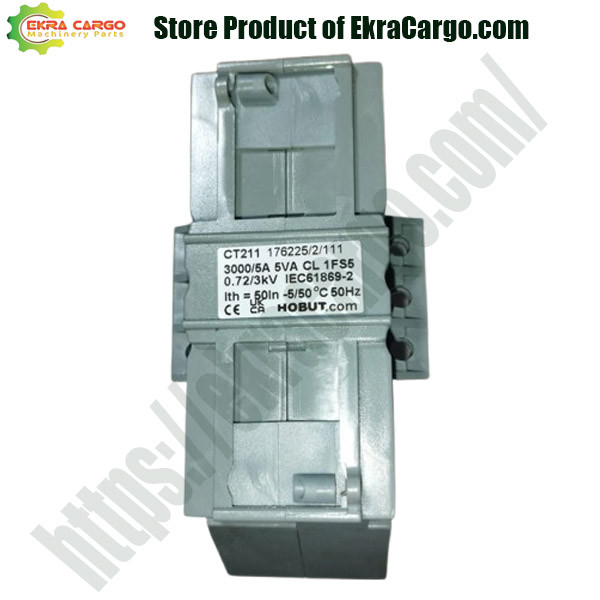
Check the product at Ekra Cargo
Choosing the wrong PT can lead to inaccurate
billing, faulty system protection, and catastrophic equipment failure. This
guide is designed to be your one-stop resource. We’ll demystify what a
potential transformer is, how it works, its various types, and most
importantly, provide a detailed buying guide with product recommendations to
help you make the perfect choice for your application.
What is a Potential Transformer (PT)? The Heart of
High-Voltage Sensing
A Potential Transformer is a type of instrument transformer designed
to step down high system voltages to a standardized, safe, and measurable
level. Its primary purpose is not to transfer power but to provide an accurate,
low-voltage replica of the high-voltage waveform for metering and protection
devices.
Think of it as a precision translator. It takes a
language (very high voltage) that your meters and relays can't understand and
translates it into a language they can (typically 120V or 69.3V in the US, or
110V in other parts of the world).
How Does a Potential Transformer Work?
A PT operates on the same basic principle of
electromagnetic induction as any other transformer:
1.
The high-voltage circuit is connected to the primary winding.
2.
A proportional low-voltage signal is induced in
the secondary winding.
3.
The ratio between the primary and secondary windings
is fixed and known as the Turns Ratio (e.g., 4800:120V).
This allows a standard voltmeter connected to the
secondary terminals to display the primary voltage simply by applying a scaling
factor (e.g., multiplying the reading by 40 for a 4800:120V PT).
Key Function:
·
To Isolate: It provides galvanic isolation between the dangerous
high-voltage circuit and the personnel and low-voltage equipment.
·
To Reduce: It steps down the voltage to a safe, standardized value.
·
To Replicate: It accurately reproduces the primary voltage waveform in
magnitude and phase angle.
Why are Potential Transformers So Crucial?
Applications Unveiled
PTs are not just a convenience; they are a necessity
for safety, accuracy, and system reliability. Their applications fall into two
main categories:
1. Metering and Revenue Billing:
This is where accuracy is
paramount. Utilities use high-accuracy class PTs (e.g., 0.3
Class) in conjunction with Current Transformers (CTs) to measure the energy
consumed by large industrial and commercial customers. An error of even 0.5%
can translate to significant financial loss over time.
2. Protective Relaying and
Control:
For protection systems, reliability and
speed are more critical than extreme accuracy.
Relays that protect multimillion-dollar equipment like generators,
transformers, and motors rely on PTs to detect abnormal voltage conditions—such
as over-voltage, under-voltage, or ground faults—and trigger breakers to
isolate the fault before it causes damage.
Common specific applications include:
·
Synchronizing generators to the grid.
·
Providing input for power factor correction systems.
·
Feeding voltage signals to SCADA systems for grid
monitoring.
·
Supplying voltage references for excitation systems.
A Deep Dive into Types of Potential Transformers
Not all PTs are created equal. The right choice
depends on your voltage level, physical space, and budget.
1. Electromagnetic (Wound) Potential Transformers
These are the traditional, most common type. They
consist of a magnetic core with primary and secondary windings, immersed in oil
or epoxy resin for insulation.
·
Pros:
o High Accuracy: Excellent for
precision metering applications.
o Proven Technology: Reliable and
well-understood.
o Rugged: Can be built
for very high voltage applications (up to 765kV and beyond).
·
Cons:
o Large and Heavy: Especially at
higher voltages.
o Risk of Ferroresonance: A
dangerous overvoltage phenomenon that can occur under certain switching
conditions.
o Higher Cost: Particularly
for high-voltage units.
2. Capacitive Voltage Transformer (CVT)
A CVT uses a capacitive voltage divider to first
step down the high voltage before feeding it to a smaller electromagnetic
transformer. They are predominantly used in transmission systems above 100kV.
·
Pros:
o Cost-Effective for High Voltage: More economical than electromagnetic PTs at EHV levels.
o Dual Function: Can also be
used as a coupling capacitor for Power Line Carrier (PLC) communication.
o Eliminates Ferroresonance: Not susceptible to this issue.
·
Cons:
o Frequency Dependent: Accuracy can
be affected by changes in system frequency.
o Transient Response: Slower
response to rapid voltage changes compared to electromagnetic PTs, which can be
a drawback for some protection schemes.
o Complex Design: More
components can mean more potential points of failure.
3. Low-Voltage (Dry-Type) Potential Transformers
These are small, epoxy-cast transformers used
indoors on low-voltage switchgear and control panels for voltages typically up
to 600V.
·
Pros:
o Compact and Lightweight: Easy
to install in tight spaces.
o Maintenance-Free: Encapsulated
windings are protected from dirt and moisture.
o Inexpensive: Very low cost
compared to high-voltage units.
·
Cons:
o Limited Voltage Class: Not
suitable for medium or high voltage.
Key Specifications: Your Potential Transformer
Buying Guide
Don't just pick a PT based on voltage. Here are the
critical specifications you MUST consider:
1.
Rated Primary
Voltage (Vp): The system voltage it's designed for (e.g.,
7200V, 13.8kV, 115kV).
2.
Rated Secondary
Voltage (Vs): The output voltage (e.g., 120V, 115V, 69.3V).
Must match your meter/relay input.
3.
Accuracy Class: Defines the maximum permissible error under specified
conditions.
o Metering (e.g., 0.3, 0.6): Used for revenue billing. The number indicates the percent
ratio error at rated voltage.
o Protection (e.g., 3P, 6P): Used for relays. The letter 'P' stands for protection, and
the number indicates the composite error at 5% of rated voltage.
4.
Burden (VA): The maximum load in Volt-Amperes the secondary can supply
while maintaining its accuracy. Exceeding this burden will cause errors. Common
values are 25, 50, 100, 200 VA.
5.
Insulation Class: Dictates the basic impulse level (BIL) the PT can
withstand, indicating its ability to survive voltage surges like lightning
strikes.
6.
Application: Clearly define if it's for Metering (requires high
accuracy at 90-110% of rated voltage) or Protection (requires good
accuracy over a wider range, including down to 5% voltage).
Top Potential Transformer Product Recommendations
Here’s a breakdown of common PT types to help you
narrow your search. (Note: These are generic product categories. You would insert your
specific product models and names here with links to your product pages).
Product 1: Ekra Cargo's High-Accuracy Metering PT
Ideal for utility substations and large industrial
metering.
·
Pros:
o Exceptional 0.3 accuracy class for revenue-grade billing.
o Optimized thermal performance for stable operation under load.
o Robust oil-filled or epoxy insulation for long service life.
o Compliant with IEEE C57.13 and ANSI standards.
·
Cons:
o Higher unit cost.
o Larger physical footprint than protection-class units.
·
Best For: Utilities, independent power producers, and large
facilities where accurate kWh measurement is critical for financial
transactions.
Product 2: Ekra Cargo's Protection-Class PT
Built for reliability in tough environments for
relay and control circuits.
·
Pros:
o Excellent performance across a wide voltage range.
o Designed to withstand system fault conditions.
o Often more compact and cost-effective than metering-grade PTs.
o Available in both outdoor and indoor designs.
·
Cons:
o Not accurate enough for revenue metering.
·
Best For: Industrial plant power distribution, generator protection,
feeder protection, and backup relaying.
Product 3: Ekra Cargo's Low-Voltage, Dry-Type PT
The perfect solution for panel builders and control
cabinets.
·
Pros:
o Extremely compact and lightweight.
o Fully encapsulated, maintenance-free design.
o Very affordable.
o Easy to mount on DIN rail or directly.
·
Cons:
o Limited to low-voltage applications (e.g., 600V and below).
·
Best For: Motor control centers (MCCs), control panels, automation
systems, and providing voltage signals to PLCs and drives.
Installation and Safety Best Practices
A quality PT is only as good as its installation.
·
Grounding: The secondary circuit MUST be grounded at
exactly one point. This is a critical safety rule to prevent the secondary from
rising to primary voltage if an insulation breakdown occurs.
·
Fusing: Protect the secondary circuit with fuses or breakers. The
primary side should also be fused or connected via a circuit breaker.
·
Burden Calculation: Before installation, calculate the total burden of all
connected devices (meters, relays, transducers) to ensure it does not exceed
the PT's rated VA.
· Environment: Choose the right enclosure (e.g., indoor vs. outdoor, NEMA 3R) for your environment.
Check product at Ekra Cargo
Conclusion:
Partner with Precision and Safety
Selecting the right potential transformer is a
technical decision with significant implications for safety, financial
accuracy, and system reliability. By understanding your application, voltage
levels, and accuracy requirements, you can make an informed choice that
protects your assets and ensures your electrical system operates as intended.
Don't leave this critical decision to chance.
Ready to find the perfect
Potential Transformer for your project?
Ekra Cargo has been a trusted leader in electrical measurement and
protection solutions for over [X] years. Our experts are ready to help you
navigate the specifications and ensure you get a PT that delivers unmatched
performance and reliability.
Explore our full range of high-quality Potential Transformers on our product page or contact our technical sales team for a personalized consultation today!


Ekracargo.com - Your trusted partner in industrial efficiency, providing a wide range of premium quality spare parts at competitive prices.
Contact Info
- Address: House 54 | Road 14 | Sector 14 | Uttara | Dhaka 1230 | Bangladesh
- Phone: Contact: +8801634736139 (WhatsApp) ,+8801789394669 (WhatsApp)
- Email: info@ekracargo.com