




PCR Machine Diagram: Components, Workflow, and Applications
Discover detailed information about
PCR machines, including a comprehensive diagram and insights into how these
essential tools function. Explore top-quality PCR machines at Ekra Cargo.
Polymerase Chain Reaction (PCR)
technology has revolutionized molecular biology, diagnostics, and research. PCR
machines, also known as thermal cyclers, automate the DNA amplification
process, making it faster and more accurate. In this blog, we’ll break down the
PCR machine diagram to help you understand the components, their roles, and the
workflow of this critical lab equipment.
What
Is a PCR Machine?
A PCR machine is an automated
laboratory device that amplifies specific DNA sequences through a series of
heating and cooling cycles. These cycles allow DNA denaturation, annealing of
primers, and synthesis of new DNA strands.
Key
Features of a PCR Machine:
- High precision temperature control.
- Easy-to-use software for setting protocols.
- Compatibility with various sample volumes.
PCR
Machine Diagram: Understanding the Components
A PCR machine typically consists of
the following key components, illustrated in a standard PCR machine diagram:
1.
Thermal Block
The thermal block is where the
samples are placed. It holds microtubes or plates containing the DNA samples
and reagents. The block cycles through different temperatures for each step of
the PCR process.
2.
Heaters and Cooling Systems
PCR machines rely on precise
temperature control, achieved through integrated heaters and cooling systems.
These components ensure rapid and accurate temperature changes during the
denaturation, annealing, and extension phases.
3.
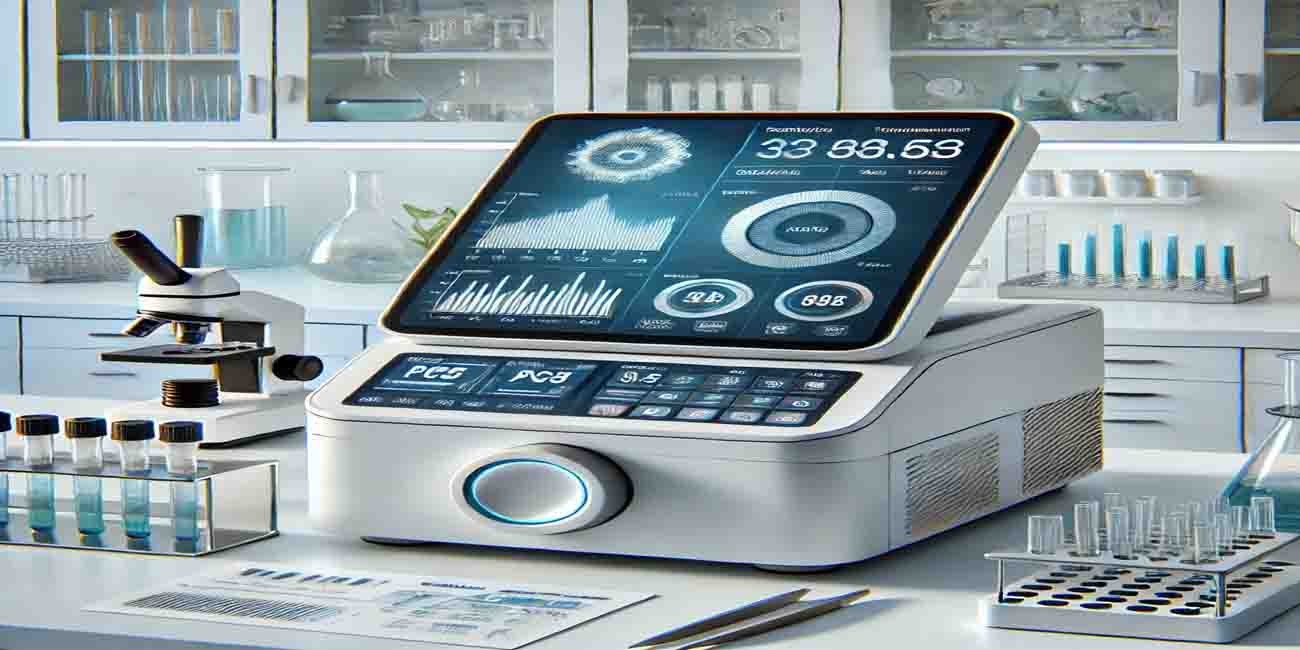
Control Panel or Interface
The user interface allows scientists
to program the machine for specific protocols, adjust cycle settings, and
monitor the progress. Modern machines feature touch screens with intuitive
software.
4.
Lid Heater
A heated lid prevents condensation
within the reaction tubes, ensuring consistent sample integrity.
5.
Power Supply Unit
The power supply ensures the machine
operates reliably, maintaining consistent energy levels for uninterrupted
cycles.
How
a PCR Machine Works: Step-by-Step
Understanding the PCR process helps
illustrate the function of each component. Here's how the typical workflow
proceeds:
Step
1: Denaturation
The machine heats the sample to
around 94-98°C, causing the double-stranded DNA to separate into single
strands.
Step
2: Annealing
The temperature is lowered to
50-65°C, allowing primers to bind to their complementary DNA sequences.
Step
3: Extension
At approximately 72°C, Taq
polymerase synthesizes new DNA strands by adding nucleotides to the primers.
Step
4: Cycle Repetition
The process is repeated for 20-40
cycles, exponentially amplifying the target DNA sequence.
Applications
of PCR Machines
1.
Medical Diagnostics
PCR is widely used in disease
detection, including COVID-19, HIV, and tuberculosis.
2.
Genetic Research
PCR aids in cloning, sequencing, and
identifying genetic markers.
3.
Forensic Science
PCR helps amplify DNA from crime
scene evidence for identification.
4.
Food Safety
PCR ensures the detection of
pathogens in food products, ensuring quality and safety.
5.
Environmental Testing
PCR is used to detect contaminants
and monitor ecological health.
Choosing
the Right PCR Machine
When selecting a PCR machine,
consider factors such as sample throughput, compatibility with reagents, and
user interface. At Ekra Cargo, we offer a range
of PCR machines tailored to your laboratory needs.
Understanding the components and
workflow of a PCR machine through its diagram is essential for any scientist or
lab professional. These machines are vital for molecular biology, diagnostics,
and research, enabling breakthroughs in various scientific fields. Explore
high-quality PCR machines at Ekra Cargo and elevate your
laboratory’s capabilities.


Ekracargo.com - Your trusted partner in industrial efficiency, providing a wide range of premium quality spare parts at competitive prices.
Contact Info
- Address: House 54 | Road 14 | Sector 14 | Uttara | Dhaka 1230 | Bangladesh
- Phone: Contact: +8801634736139 (WhatsApp) ,+8801789394669 (WhatsApp)
- Email: info@ekracargo.com