




Orbitrap Mass Spectrometry Principle: Understanding How It Works
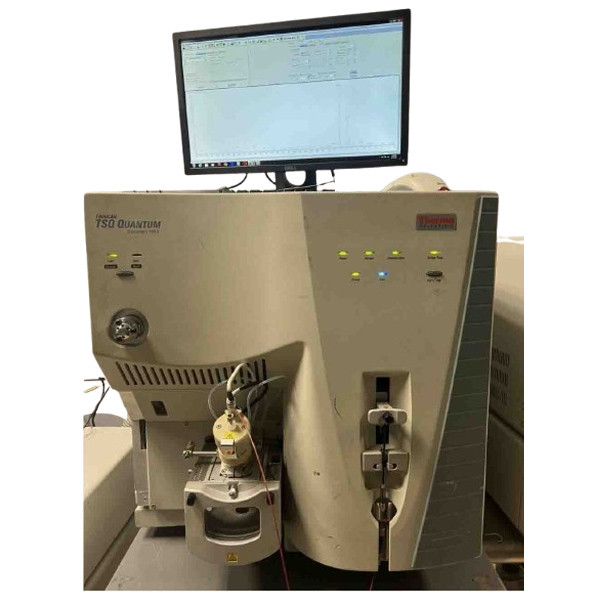
The Orbitrap mass spectrometry principle is based on trapping ions in an electrostatic field, allowing precise measurement of their mass-to-charge ratios (m/z). This innovative design delivers high-resolution and accurate mass analysis, making it ideal for advanced scientific research in proteomics, metabolomics, pharmaceuticals, and environmental studies.

Check the product at Ekra Cargo
In an Orbitrap mass spectrometer,
ions are injected into a spindle-shaped electrode. The ions orbit around the
central electrode while oscillating along its axis. These oscillations generate
an image current, which is detected and transformed into a mass spectrum using
Fourier Transform techniques. This process enables the detection of ions with
exceptional mass accuracy and resolution.
The Orbitrap
principle combines the benefits of traditional mass analyzers
with high-resolution capability. Unlike other mass spectrometers, it does not
rely on time-of-flight or quadrupole filtering alone, allowing highly detailed
molecular analysis. This makes it particularly useful for identifying proteins,
metabolites, and small molecules in complex mixtures.
Applications of Orbitrap mass spectrometry include protein identification in proteomics, drug metabolite studies, environmental contaminant detection, and biomarker research. Its high sensitivity and accuracy help researchers detect low-abundance molecules that other instruments might miss.

In conclusion, the Orbitrap mass spectrometry principle enables
precise and high-resolution molecular analysis by trapping ions in an
electrostatic field and measuring their oscillations. This technology has
revolutionized analytical laboratories, providing reliable, detailed, and
accurate data for a wide range of scientific applications.


Ekracargo.com - Your trusted partner in industrial efficiency, providing a wide range of premium quality spare parts at competitive prices.
Contact Info
- Address: House 54 | Road 14 | Sector 14 | Uttara | Dhaka 1230 | Bangladesh
- Phone: Contact: +8801634736139 (WhatsApp) ,+8801789394669 (WhatsApp)
- Email: info@ekracargo.com