




Mitsubishi Programmable Logic Controller (PLC)–The Ultimate Guide for Buyers | Best Rates | Buying Guide | Detailed Tips | Maintenance | FAQ |
Mitsubishi Programmable Logic Controller (PLC) – The Ultimate Guide for Buyers
In industrial automation, Programmable Logic Controllers (PLCs) are the brains behind automated systems. Among top PLC technology brands, Mitsubishi Electric is a brand of choice that offers high-performance, reliable, and cost-effective automation solutions. If you're running a factory, designing an automated machine, or upgrading your control systems, Mitsubishi PLCs offer the flexibility and power you need.
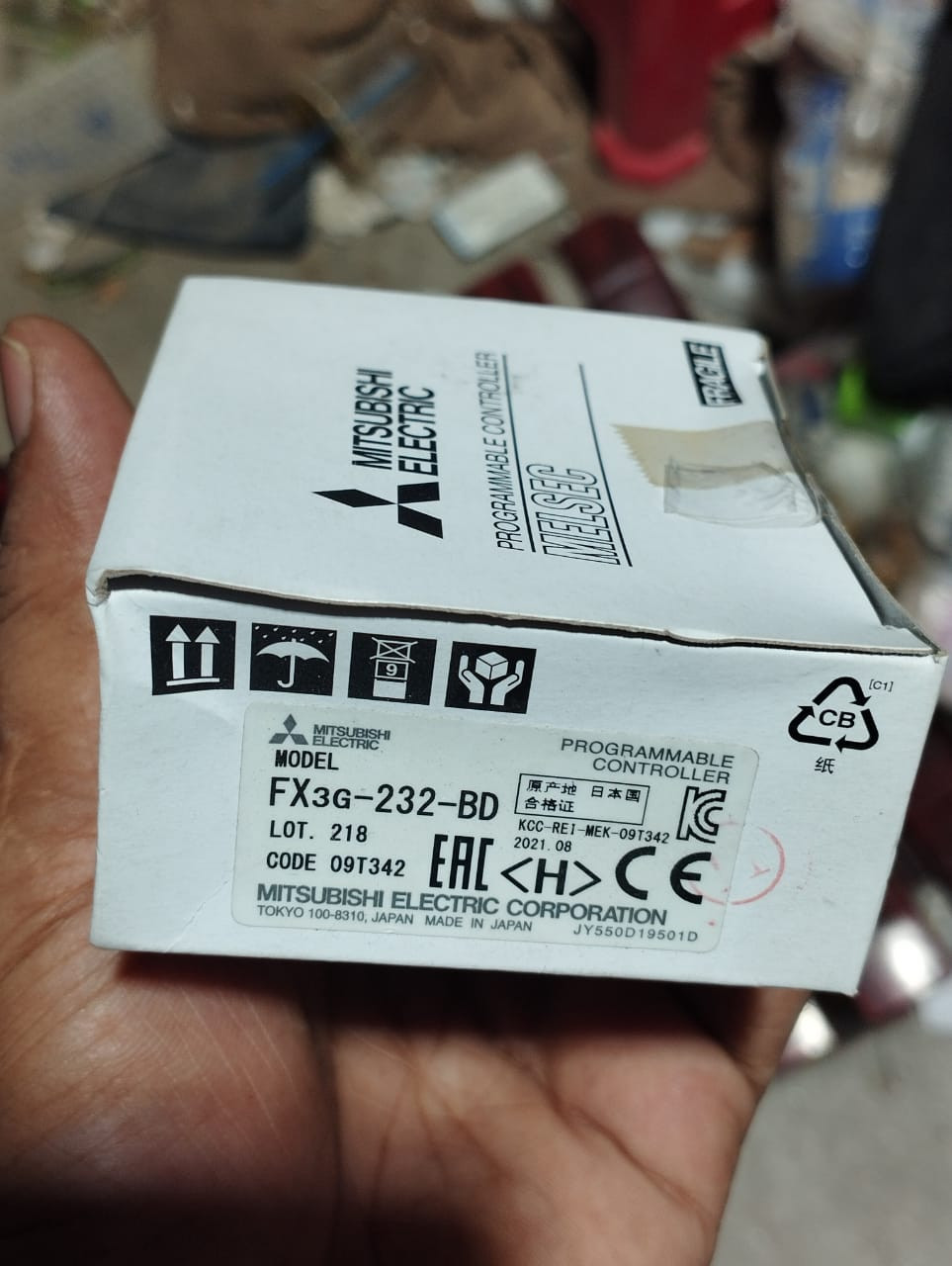
Check the product at Ekra Cargo
Here's
what we'll cover in this guide:
What
are Mitsubishi PLCs and how do they function
Principal
benefits and applications
Product
recommendations with benefits and drawbacks
How
to buy the best model
Frequently
Asked Questions
What Is a Mitsubishi Programmable Logic Controller (PLC)?
A
Mitsubishi PLC is a type of industrial computer designed to automate
electromechanical processes, such as controlling machinery, production lines,
or robotic systems. These PLCs are programmed using Mitsubishi’s own software
(such as GX Works3), and they are widely used in industries like manufacturing,
energy, HVAC, food processing, and packaging.
Mitsubishi
offers a wide range of PLC families including:
FX
Series – Compact and ideal for small to medium automation projects
L
Series – High-performance, modular, mid-range systems
Q
Series – High-end, scalable PLCs for large industrial systems
iQ-R
Series – Next-generation applications' high-speed, high-reliability PLCs
Why Select Mitsubishi PLCs?
✅
Top Benefits
Reliability:
Enduring performance in harsh environments
Scalability:
Easy control systems to intricate automation networks
Advanced
Features: High-speed processing, I/O embedded, Ethernet, and more
Easy-to-Use
Programming: Accommodated by GX Developer and GX Works software
Global
Support: Mitsubishi offers global technical and service support
❌
Potential Disadvantages
First
Learning Curve: New users may take time to be familiar with the software
Higher
Price: Some of them are pricey compared to other competitors
Limited
Compatibility: Support for non-Mitsubishi hardware may need extra steps
Best
Mitsubishi PLC Picks
1.
Mitsubishi FX5U-32MR/DS
Good
for: Small to mid-size automation projects
Most
Important Features:
16
input / 16 output points
Embedded
Ethernet, USB, RS-485
High-speed
counters and pulse outputs
Works
with GX Works3 software
Advantages:
Compact
and easy to install
Excellent
I/O response time
Integrated communication ports
Cons:
Limited
ability for expansion of large applications
Not ideal for advanced motion control
2.
Mitsubishi L26CPU-BT
Ideal
for: Mid-range process control and automation
Key
Features:
Modular
design
2MB
program memory
Ethernet,
CC-Link IE Field supported
Supports SD card data logging
Pros:
Flexible
and scalable
Data
logging and diagnostics integrated
Energy efficient
Cons:
Requires
additional modules for full functionality
Slightly more costly than FX series
3.
Mitsubishi Q03UDECPU
Best
for: High-end industrial automation
Key
Features:
High-speed
CPU with 64k steps
Supports
multiple communication protocols
Robust
memory backup and redundancy
Ideal for networked control systems
Pros:
Advanced
processing speed
Highly
scalable and customizable
Suitable for demanding industrial tasks
Cons:
Complex
setup for beginners
Premium price range
Mitsubishi PLC Buying Guide
If
you’re new to buying PLCs or just need help finding the right model, here’s a
step-by-step buying guide tailored for Mitsubishi systems:
1.
Define Your Application Requirements
What
are you going to automate?
How
many I/O points will you need?
What
are the input/output types (digital, analog) required?
2.
Define Required Performance
Do
you need high-speed motion control processing?
Is
real-time data logging or communication important?
3.
Evaluate Connectivity Options
Do
you need Ethernet, USB, or RS-485 connectors?
Will
the PLC need to talk to other industrial devices or HMIs?
4.
Set Up Software Compatibility
All
Mitsubishi PLCs can be managed by GX Works3 or GX Developer
Check
availability and licensing of programming software
5.
Expansion Planning
Do
you see future expansion?
Modular
PLCs like the L or Q series are more flexible
6.
Budget and Total Cost of Ownership
Include
software, module, and training expenses
Sometimes
a higher initial outlay means cost savings in the long run
Applications of Mitsubishi PLCs
Mitsubishi
PLCs are applied to a broad variety of applications and used throughout a
massive range of industries and uses:
Manufacturing
Automation: Conveyor systems, packing machinery, CNC equipment
Building
Management: HVAC equipment, lighting, access control
Utilities
and Energy: Water treatment systems, solar tracking, power distribution
Food
and Beverage: Batch control systems, mixing, bottling lines
Automotive:
Assembly lines, robotic cells, safety systems
FAQs About Mitsubishi Programmable Logic Controllers
❓
Are Mitsubishi PLCs beginner-friendly?
Yes,
especially the FX series, which is compact and easy to learn. With GX Works3's
simple-to-use interface, beginners can begin working with little training.
❓
What do I use to develop Mitsubishi PLCs?
You
will use GX Works3, GX Developer, or GX IEC Developer based on your series of
PLCs. We recommend GX Works3 for new series like FX5U and iQ-R.
❓
Are Mitsubishi PLCs capable of communicating with third-party devices?
Yes,
by employing several communications protocols (Ethernet, CC-Link, Modbus,
etc.), Mitsubishi PLCs can be implemented in mixed hardware environments,
though certain arrangements may require further adjustment.
❓
Are spare parts and support readily available?
Yes.
Mitsubishi boasts an extremely strong global network of distributors and support
centers. Technical information and replacement parts are easily available.
❓
How long do Mitsubishi PLCs last?
They're designed for industrial applications—shock-resistant, heat-resistant, and capable of operating 24/7 in tough environments.
Final
Thoughts
If
you desire to streamline operations, reduce errors, and increase efficiency,
Mitsubishi Programmable Logic Controllers are an investment worth making. From
compact FX series units for basic automation functions to sophisticated Q or
iQ-R systems for complex processes, Mitsubishi has reliable, expandable
solutions for any application.
✅ Why Buy From Us?
Authorized
distributor of Mitsubishi products
Competitive prices and original components
Rapid
delivery and customer satisfaction guarantee


Ekracargo.com - Your trusted partner in industrial efficiency, providing a wide range of premium quality spare parts at competitive prices.
Contact Info
- Address: House 54 | Road 14 | Sector 14 | Uttara | Dhaka 1230 | Bangladesh
- Phone: Contact: +8801634736139 (WhatsApp) ,+8801789394669 (WhatsApp)
- Email: info@ekracargo.com