




Your Friendly Guide to Medical Devices: Empowering Your Health at Home | Best Rates | Buying Guide | Detailed Tips | Maintenance | FAQ |
Your Friendly Guide to Medical Devices: Empowering Your Health at Home
Healthcare no longer only happens in hospitals
and clinics. It's at home, on our wrists, and in our pockets. It all happens
thanks to medical devices. And devices are numerous, so it sometimes feels like
too much.
What is a medical device, anyway? How do you choose the right one? All is explained here in straightforward, simple language. You're a chronic disease manager, caregiver, or just a health enthusiast – whatever your status, you'll learn something here.
Check Some Medical Products at Ekra Cargo
What is a Medical Device? It's More
Comprehensive Than You May Have Thought!
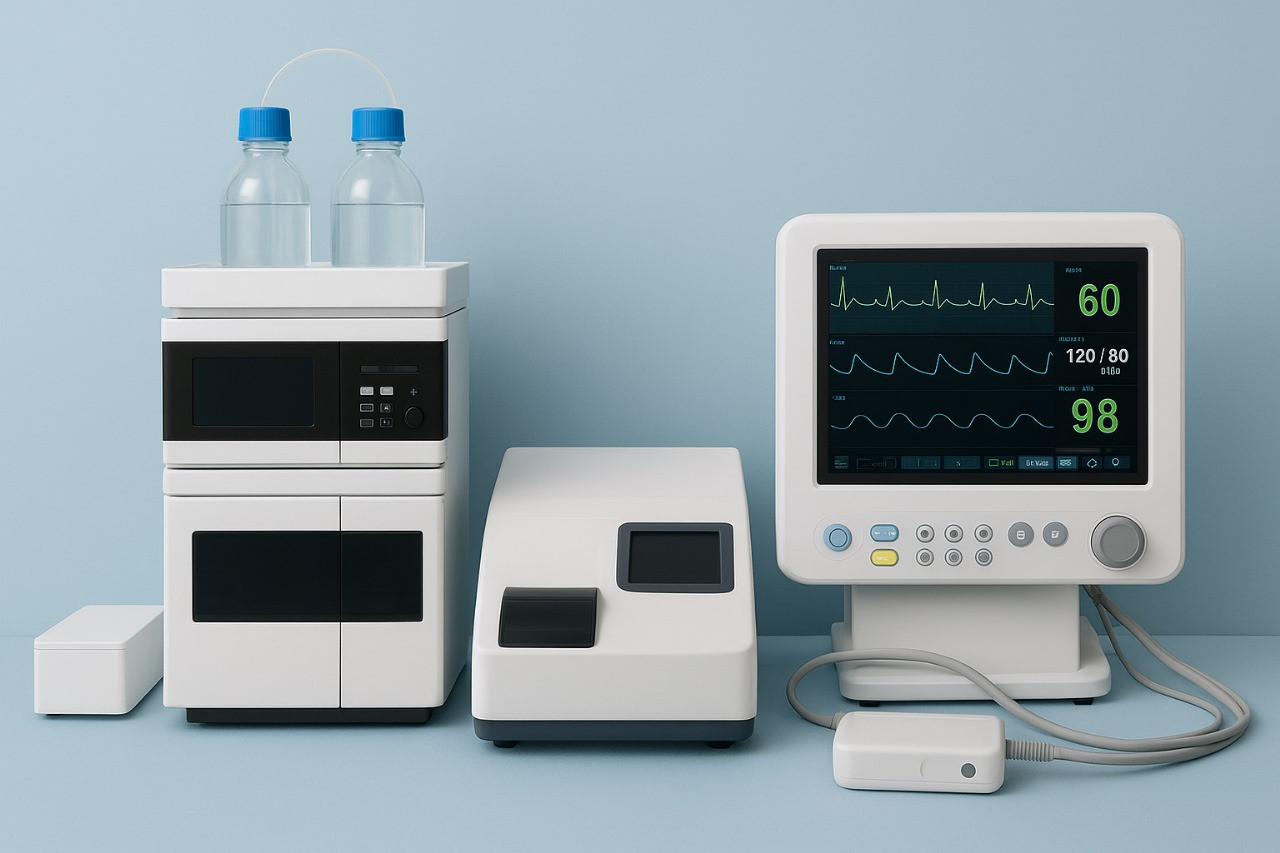
A medical device is simply any equipment,
instrument, machine, or software intended for use in the diagnosis, prevention,
monitoring, or treatment of disease or condition. It's not a drug or
medicine—it's a medical tool.
The diversity is staggering! It ranges from a
simple tongue depressor and reading glasses to a sophisticated MRI scanner and
pacemaker. The primary purpose is to have a positive impact on your health
without doing its primary thing via chemicals (like a pill would).
Types of Medical Devices: Simple to Complex
We can divide medical devices into a number of
broad categories to comprehend them.
1. Diagnostic and Monitoring Devices
These tell you or your doctor what's happening
inside your body.
Home-use: Blood pressure monitors, glucose
monitors, pulse oximeters, thermometers, fertility monitors.
Professional: X-ray devices, CT scanners, electrocardiogram
(ECG/EKG) devices.
2. Treatment Devices
They are used to treat or control a medical
condition.
Home-use: Asthma nebulizers, sleep apnea CPAP
machines, diabetes insulin pumps.
Professional: Laser surgery units, infusion
pumps, dialysis machines.
3. Assistive and Mobility Devices
These enhance quality of life and autonomy for
individuals with disability or injury.
Examples: Hearing aids, wheelchairs, walkers,
artificial limbs, grab bars.
4. Wearable and Digital Health Tech
This is the fastest expanding category,
bringing together consumer electronics and healthcare.
Examples: Smartwatches with ECG apps (like
Apple Watch Series 9), fitness trackers that monitor sleep and blood oxygen,
smart patches that transmit data to your doctor.
A Smart Buying Guide: How to Choose the Right Device
Purchasing a medical device is a significant
decision. Here is a step-by-step process to making an intelligent choice.
Consult Your Doctor: This is the first and
most vital step. Never diagnose or prescribe a device yourself. Your physician
can validate what you require, suggest particular features, and even prescribe
devices that are insurance-covered.
Define Your Primary Requirements: What is the
main purpose?
Do you require straightforward monitoring or
ongoing, connected tracking?
How often a usage will you enjoy?
Whom is it using? Use-friendliness, especially
for old-aged users.
Verify Approval and Precision: Devices that
are FDA-approved or FDA-cleared (in the United States) or CE-marked (in Europe)
are tested for safety and efficacy. Look through the reviews for any mention of
accuracy.
Consider Connectivity and Data: Many modern
devices sync with smartphone apps. This is great for tracking trends over time
and easily sharing data with your doctor. If you’re not tech-savvy, a simpler
model might be better.
Evaluate Cost and Insurance: Check if your
health insurance policy covers durable medical equipment (DME). Even if it does
not, you might be able to purchase it using pre-tax dollars through a Flexible
Spending Account (FSA) or Health Savings Account (HSA).
Read Reviews and Research Brands: Utilize
established, quality brands on the medical market. Read user reviews to learn
about real experience with accuracy, durability, and customer service.
Best Home Medical Device Options (With Pros
& Cons)
Following is a summary of some best-selling
and top-reviewed devices that can be utilized at home.
1. Omron Platinum Blood Pressure Monitor
Best for: Highly precise home blood pressure
monitoring.
Pros: FDA-approved, boasts Advanced Accuracy
technology, stores up to 200 readings for two users, Bluetooth connectivity to
app, big display.
Cons: Upper arm cuff can be inconvenient for
some, it costs more.
2. FreeStyle Libre 3 Continuous Glucose
Monitor (CGM)
Best for: People with diabetes who need
constant glucose data without fingersticks.
Pros: No routine fingerstick calibrations
needed, real-time glucose readings sent directly to your phone, small and
discreet sensor, water-resistant.
Cons: Prescription required, sensors have to
be replaced every 14 days, can be expensive without coverage.
3. Withings Sleep Analyzer Mat
Best for: Monitoring sleep quality and
detecting sleep disturbances like apnea.
Pros: Simply place it beneath your mattress—no
wearables required, tracks sleep cycles, snoring, and heart rate, provides a
full sleep score, and is compatible with other health apps.
Cons: Less portable than a wearable, provides
estimates rather than medical-grade data.
4. Fitbit Charge 6
Best for: General health and activity tracking
with some medical-grade features.
Pros: Tracks heart rate, sleep stages, and
blood oxygenation (SpO2), features built-in GPS for workouts, ECG app may
detect atrial fibrillation, excellent battery life.
Cons: The ECG feature is not a substitute for
a full diagnosis, needs to be charged frequently compared to simpler trackers.
A Personal Note: My Experience with a Home
Health Device
A few years ago, a member of my own family had
hypertension. Their doctor recommended taking it at home every morning and
evening. We started out with a cheap, no-name blood pressure machine at a
pharmacy, and the readings were completely erratic—it caused more stress than
comfort.
We invested in a well-reviewed, clinically validated monitor (an Omron model). Night and day difference. The cuff was more comfortable, the readings were accurate, and saving and graphing data in an app made doctor visits far more efficient. We could easily show trends over time. I discovered that reliability with health data is worth every penny.
Check Medical Product at Ekra Cargo
Frequently Asked Questions (FAQs)
Q: Do I need a prescription to buy a medical
device?
A: Possibly. Most devices, like basic
thermometers or blood pressure cuffs, are available over-the-counter. Others,
like continuous glucose monitors or CPAP machines, require a prescription from
a healthcare professional.
Q: How often do I need to calibrate or check
the accuracy of my device?
A: That depends. For equipment like blood
pressure monitors, you can compare its reading to what your doctor says once a
year. With scales, you can compare with a standard weight. Always follow the
manufacturer's instructions. Your health care professional will teach you how
to calibrate prescription equipment.
Q: Are smartwatches and health apps medical
devices?
A: Some are, and some aren't. An app or
feature intended to diagnose or treat an illness (like the FDA-cleared ECG app
on certain smartwatches) is a medical device and is regulated as such. Basic
step counters and calorie guessers generally aren't.
Q: How do I keep my device clean and cared
for?
A: Always unplug the device first before
cleaning. Use only a soft, damp cloth. Do not use harsh chemicals or submerge
the device unless specified by the manual that the device is waterproof. For
some devices like CPAP masks or nebulizer tubes, follow the cleaning
instructions carefully so as not to contract infection.
Q: May I buy used medical devices?
A: Be very cautious. While it may be tempting
to save money, second-hand equipment may be old, faulty, or not sanitized
properly. Products with wearable parts (like CPAP masks) should never be bought
second-hand. Your doctor's recommendation should always be consulted prior to
buying a second-hand machine.
Equipping yourself with knowledge and the
right devices is step one towards taking control of your well-being. With
cautious choice of your medical tools, you become an active, responsible
participant in your own health.


Ekracargo.com - Your trusted partner in industrial efficiency, providing a wide range of premium quality spare parts at competitive prices.
Contact Info
- Address: House 54 | Road 14 | Sector 14 | Uttara | Dhaka 1230 | Bangladesh
- Phone: Contact: +8801634736139 (WhatsApp) ,+8801789394669 (WhatsApp)
- Email: info@ekracargo.com