




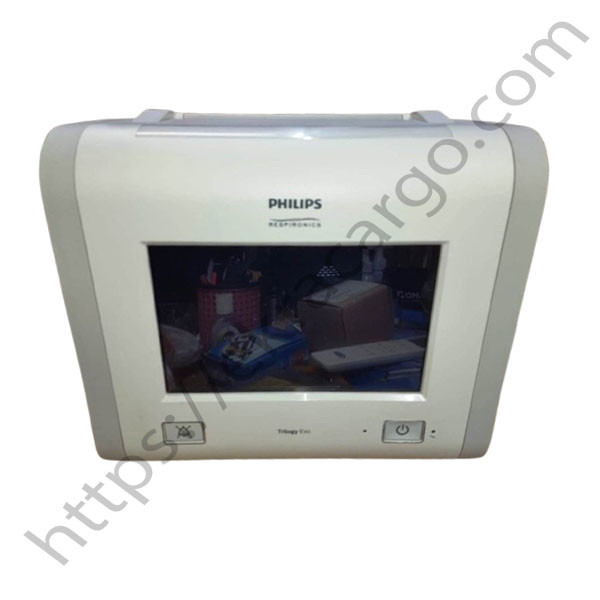
The Ultimate Guide to Life Support Ventilators: Enhancing Patient Care with the Philips Trilogy Evo
In the critical world of modern medicine, few devices are
as vital as the life support ventilator. These
sophisticated machines are engineered to take over or assist the fundamental
process of breathing when a patient's lungs are unable to function effectively
on their own. For individuals facing respiratory failure due to chronic
illness, acute disease, or post-surgical recovery, a ventilator is not just a
piece of equipment—it is a bridge to recovery, a tool for stability, and a
means of preserving life.
This
comprehensive guide will delve into what a life support ventilator is, how it
works, its various types, and why the Philips Respironics Trilogy
Evo Ventilator stands out as a premier choice for both clinical
and home care settings.
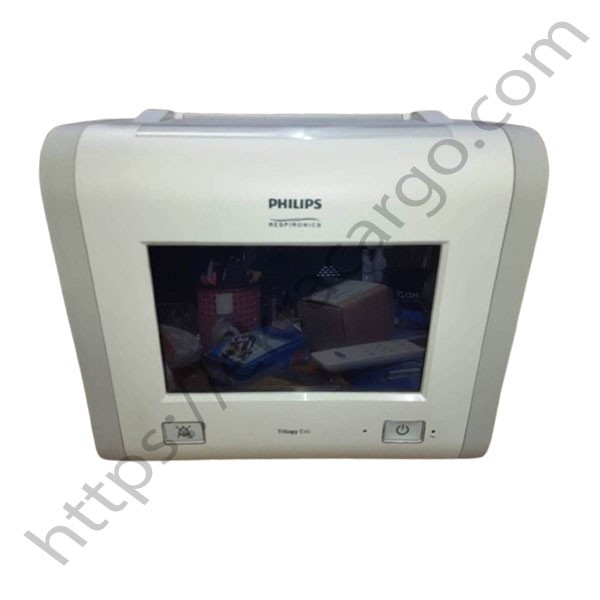
Visit our product page to explore the specifications, features, and availability of the Philips Respironics Trilogy Evo Ventilator:
https://www.ekracargo.com/product/philips-respironics-trilogy-evo-ventilator
What is a Life Support Ventilator and How Does
It Work?
At its core,
a life support ventilator is a medical device that
moves breathable air into and out of the lungs. It is used when a patient
cannot breathe independently or is not breathing efficiently enough to maintain
proper oxygen and carbon dioxide levels in the blood.
The ventilator
performs this essential function through a process called mechanical
ventilation. Here’s a simplified breakdown:
1. Initiation of Breath: The machine delivers a pressurized
flow of air (often blended with a specific concentration of oxygen) into the
patient's airways through a tube. This tube can be placed in the mouth or nose
(non-invasive) or directly into the trachea through a procedure called
intubation (invasive).
2. Gas Exchange: This delivered air reaches the
alveoli—the tiny air sacs in the lungs where the crucial exchange of oxygen and
carbon dioxide takes place. Oxygen enters the bloodstream, while carbon dioxide
is removed.
3. Exhalation: The ventilator then cycles off,
allowing the patient's chest and lungs to passively recoil, pushing the carbon
dioxide-rich air back out through the tube.
Modern
ventilators, like the one we will discuss, are controlled by microprocessors
that allow for precise customization of every breath, tailoring the therapy to
the patient's specific and often changing needs.
Key Types of Ventilatory Support
Ventilators are
broadly categorized based on how they interface with the patient and their
primary mode of operation.
1.
Invasive vs. Non-Invasive Ventilation
·
Invasive Mechanical Ventilation: This involves an endotracheal tube
inserted through the mouth or nose into the trachea, or a tracheostomy tube
placed directly into the trachea through a surgical opening in the neck. It is
used for patients who require full respiratory support, typically in an
Intensive Care Unit (ICU) setting.
·
Non-Invasive Ventilation (NIV): This method delivers pressurized
air through a sealed mask that fits over the nose or both the nose and mouth.
NIV is often used for patients with less severe respiratory insufficiency or
for those with chronic conditions like COPD or sleep apnea, allowing for
ventilation without the need for intubation.
2.
Common Modes of Ventilation
Ventilators can
operate in several modes, with the most common being:
·
Assist/Control (A/C): The ventilator delivers a preset breath if the
patient does not initiate one on their own within a certain time frame. If the
patient tries to take a breath, the machine "assists" by delivering a
full, supported breath.
·
Synchronized Intermittent Mandatory Ventilation (SIMV): The ventilator delivers a set
number of breaths per minute, but it synchronizes with any patient-initiated
breaths. This mode allows the patient to breathe spontaneously between the
machine-delivered breaths, helping to maintain and strengthen respiratory
muscles.
·
Continuous Positive Airway Pressure (CPAP) & Bi-Level
Positive Airway Pressure (BiPAP): While often categorized separately, these are forms of
non-invasive support. CPAP provides a single continuous pressure, while BiPAP
offers two different pressures—one for inhalation (IPAP) and a lower one for
exhalation (EPAP)—making it easier for the patient to breathe out.
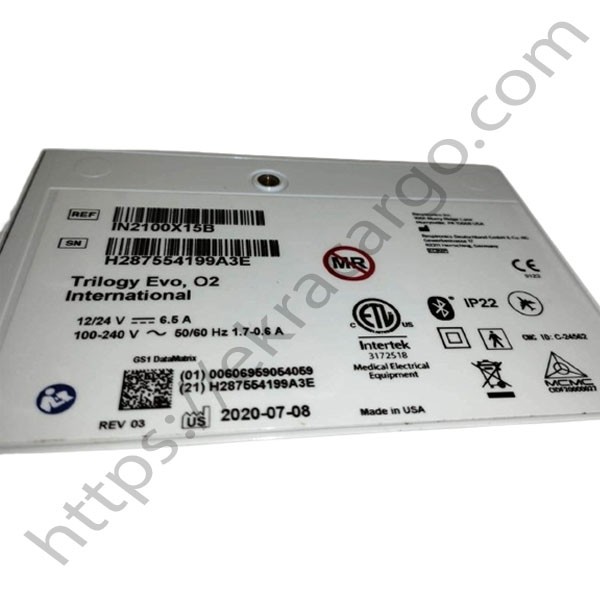
Introducing the Advanced Solution: Philips
Respironics Trilogy Evo Ventilator
In the landscape
of respiratory care, versatility, reliability, and ease of use are paramount.
The Philips Respironics Trilogy Evo Ventilator embodies
all these qualities and more, making it an exceptional choice for a wide range
of patients and care environments.
Whether in a
hospital ICU, a step-down unit, or the comfort of a patient's home, the Trilogy
Evo is designed to deliver outstanding performance. Its core strength lies in
its adaptability; it is a fully-featured ventilator capable of providing both
invasive and non-invasive ventilation. This means a patient can start on the
Trilogy Evo in the hospital for critical care and seamlessly transition to
using the same device for long-term management at home, ensuring continuity of
care and reducing the stress associated with switching equipment.
Key Features
and Benefits of the Philips Trilogy Evo:
·
Unmatched Versatility: It functions as a critical care ventilator, a
transport ventilator, and a home care ventilator all in one compact unit. This
eliminates the need for multiple devices, simplifying logistics and potentially
reducing costs.
·
Intuitive Digital Ecosystem: The device features a modern,
color touchscreen interface that makes setup and monitoring straightforward for
clinicians and trained caregivers. Coupled with the Philips Care Orchestrator,
it enables remote patient monitoring, allowing healthcare providers to track
patient data and therapy adherence from a distance.
·
Advanced Breath Delivery: The Trilogy Evo is designed to provide a more
natural breathing experience. Its sensitive triggering and cycling algorithms
work with the patient's own breathing efforts, reducing the
"fighting the ventilator" sensation (known as patient-ventilator
asynchrony) that can be common with less advanced machines.
·
Comprehensive Alarm System: Patient safety is a top priority.
The ventilator is equipped with a robust system of visual and audible alarms
that alert caregivers to changes in patient status or machine function,
providing peace of mind for everyone involved.
·
Long-Lasting Battery: With a powerful internal battery, the Trilogy Evo
is ideal for mobility, both within a healthcare facility and for active
patients at home who wish to maintain their lifestyle without being tethered to
a wall outlet.
Who Can Benefit from the Philips Trilogy Evo
Ventilator?
This
advanced life support ventilator is suitable for a
diverse patient population, including those with:
·
Chronic Obstructive Pulmonary Disease (COPD)
·
Neuromuscular Diseases (e.g., ALS, Muscular Dystrophy)
·
Sleep-Disordered Breathing requiring complex ventilation
·
Respiratory Failure post-surgery or due to acute illness
·
Restrictive Lung Diseases
Why Choose Ekra Cargo for Your Respiratory
Needs?
At Ekra Cargo,
we understand that sourcing medical equipment is a decision rooted in trust and
quality. We are committed to providing our clients with top-tier, reliable
medical devices that make a tangible difference in patient care.
The Philips Respironics Trilogy
Evo Ventilator available through us represents the
pinnacle of respiratory technology. When you choose this device from Ekra
Cargo, you are not just purchasing a machine; you are investing in a
comprehensive solution for respiratory support, backed by our commitment to
service and excellence.
Ready to
Learn More?
Navigating the world of respiratory support can be complex, but you don't have to do it alone. If you or a loved one requires advanced ventilatory support, the Philips Trilogy Evo could be the life-enhancing solution you need.
Invest in
advanced care. Invest in quality of life. Choose Ekra Cargo for your medical
equipment needs.


Ekracargo.com - Your trusted partner in industrial efficiency, providing a wide range of premium quality spare parts at competitive prices.
Contact Info
- Address: House 54 | Road 14 | Sector 14 | Uttara | Dhaka 1230 | Bangladesh
- Phone: Contact: +8801634736139 (WhatsApp) ,+8801789394669 (WhatsApp)
- Email: info@ekracargo.com