




Everything You Need to Know About DVI Splitters Best Picks, Setup Tips & Buying Guide | Best Rates | Buying Guide | Detailed Tips | Maintenance | FAQ |
Everything You Need to Know About DVI Splitters: Best Picks, Setup Tips & Buying Guide
If you're working with video signals on your computer at home or in the office, then you've probably heard of a DVI splitters. Whether you're creating a multi-monitor workstation, duplicating screens within a meeting room, or distributing content to multiple screens within a retail or educational setting, a DVIs splitter is a simple yet efficient solution.
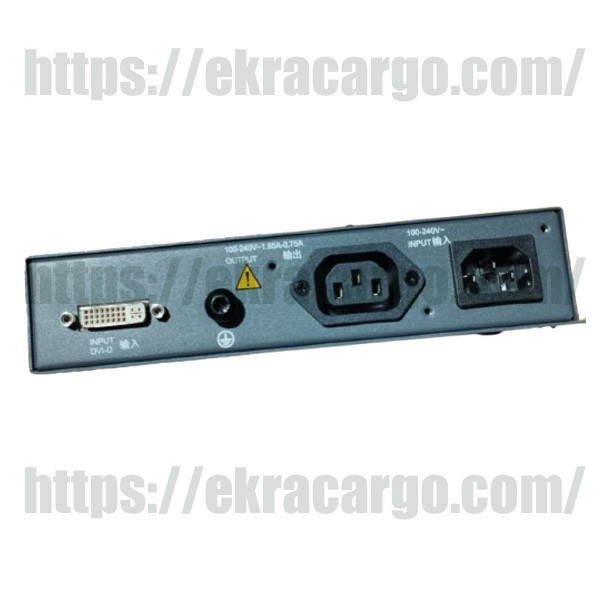
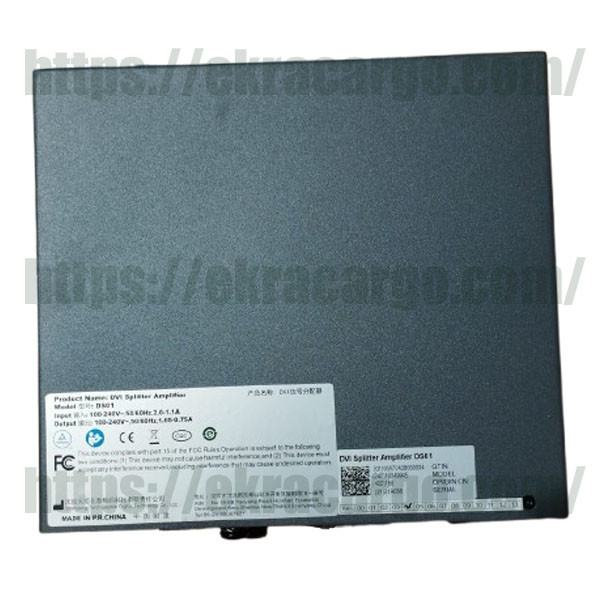
Check the Product at Ekra Cargo
Below,
we'll describe:
What
is a DVIs splitter
How
it works
When
to use one
Our
top product recommendations (with pros and cons)
A
full buying guide
Frequently
asked questions
Alright,
let's dive in.
What is a DVIs Splitter?
A
DVI splitter is some hardware that takes a single DVI video output and splits
the signal into two or more outputs, and you feed the same video signal to
multiple monitors at once.
This
comes in particularly useful for:
Presentations
in classrooms or meeting rooms
Digital
shop signs or restaurant signage
Security
systems
Any
environment which requires a mirror display setup
There
are two main groups:
Passive
DVIs Splitters – No power, no external power, short cable runs only
Active
DVIs Splitters – Powered, enable longer cable runs, typically support
resolutions up to 1080p or higher
How Does a DVI Splitter Work?
A
DVIs splitter accomplishes the task of duplicating the electrical signal of one
source and distributing it to two or more DVI-compatible displays. It doesn't
really process the signal, but duplicates it. So, it's perfectly suited for
mirroring displays and not extending them (for that, use a multi-output
graphics card).
When Do You Need a DVIs Splitter?
You
may need a DVIs splitter if you:
Want
to show the same information on two screens (e.g., classroom and projector)
Need
to show a presentation on multiple screens simultaneously
Are
streaming video onto numerous TVs in a public setting
Need
a stable digital signal from one source split apart
Note:
DVIs splitters are ideal for use with computers, DVD players, security DVRs, and
more—provided the source and display support DVI.
Top 3 DVIs Splitter Recommendations
Here
are our highest quality recommendations in terms of quality, reliability,
signal quality, and compatibility:
1.
DVIs Splitter 1 In 2 Out by Cisco
Best
For: Home and business users who need a reliable, plug-and-play DVIs splitter.
Key
Features:
Supports
Full HD (1920x1080) resolution
Gold-plated
connectors for exceptional signal transfer
Plug-and-play
functionality
Compatible with most DVI-enabled monitors and
PCs
Pros:
✅
Exceptional signal quality
✅
Metal housing – long-lasting and durable
✅
Easy install – no software necessary
✅
Great price-to-performance value
Cons:
❌
Only duplicates (no extended display)
❌ Does not directly support HDMI conversion
2.
StarTech.com 2-Port DVI Video Splitter
Best
For: Corporate offices, conference rooms, and classrooms
Key
Features:
Active
splitter, comes with power adapter
Supports
high-resolution up to 1920x1200
Extended
cable distance (up to 16 ft)
Pros:
✅
Good signal integrity on long cables
✅
Professional-level build
✅
Great for long-term use
Cons:
❌
More expensive than passive counterparts
❌
Bulky design
3.
Tripp Lite 2-Port DVIs Splitter with Signal Booster
Best
For: Professional high-performance environments and A/V experts
Key
Features:
Boosts
signal for longer transmission (up to 98 ft)
HDCP
compliant and resolution up to 1920x1200
Rack-mounted
format
Pros:
✅
Ideal for complex A/V environments
✅
Good signal amplification
✅
Excellent build quality
Cons:
❌
Too much for simple home environments
❌
External power needed
Buying Guide: How to Choose the Right DVI Splitter
✔️
1. Number of Outputs
Most
DVIs splitters at the entry level have 2 outputs, though there are 4- or 8-port
alternatives for larger installations.
Tip:
If future-proofing, choose one with extra outputs.
✔️
2. Resolution Support
Make
sure the splitter is supported with the resolution you need—1080p is common,
but if you're using high-end monitors, you'll want 1920x1200 or higher.
✔️
3. Active vs. Passive
Passive
Splitter: Cheaper, no external power, has limited reach
Active
Splitter: Power-greedy, more signal, longer range
If
you're working with long cable runs or need constant signal strength, use an
active splitter.
✔️
4. Build Quality
Look
for:
Gold-plated
connectors
Metal
casing
Signal
boosting features
A
well-built DVIs splitter reduces the chance of signal degradation and longevity.
✔️
5. Compatibility
Ensure
that both your source and monitors support DVI. If you're working with HDMI or
VGA, adapters or a hybrid splitter may be required.
Pro Tips for Setup
Use
the same monitor for best performance (especially when working with the same
resolutions).
Avoid
lengthy cable length with passive splitters—keep it under 6 feet.
Use
shielded DVI cables to reduce electromagnetic interference.
If
you are seeing a black screen or flickering, make sure the display resolutions
are the same and cables are correctly plugged in.
❓Frequently Asked Questions
Q1.
Can I extend my desktop to two monitors with a DVI splitter?
No.
A DVIs splitter merely copies your display. For desktop extension, use a
dual-head graphics card.
Q2.
Do I need a powered DVIs splitter?
Yes,
if you have cables over 6 feet long or large monitors. Powered (active)
splitters ensure signal quality.
Q3.
Will a DVIs splitter work with HDMI or VGA monitors?
Only
if using proper DVI to HDMI/VGA adapters. Be sure that the signal type
(digital/analog) is compatible.
Q4.
Does a DVIs splitter reduce image quality?
Only if you're using a low-quality splitter and cables. Active splitters typically maintain signal fidelity.
Conclusion
A
DVI splitter is a basic yet potent piece of equipment to broadcast your video
signal to multiple monitors. Whether you're designing a professional display
environment or copying content for presentations, the splitter you use can be
the difference between quality and convenience.
We
recommend starting with our Cisco DVIs Splitter for a fast, affordable, and
dependable option. It's perfect for home or office use, with plug-and-play
simplicity and crystal-clear output.


Ekracargo.com - Your trusted partner in industrial efficiency, providing a wide range of premium quality spare parts at competitive prices.
Contact Info
- Address: House 54 | Road 14 | Sector 14 | Uttara | Dhaka 1230 | Bangladesh
- Phone: Contact: +8801634736139 (WhatsApp) ,+8801789394669 (WhatsApp)
- Email: info@ekracargo.com