




Cylindrical Roller Bearing Types Complete Guide with Buying Tips | FAQ |
Cylindrical Roller Bearing Types: Complete Guide with
Buying Tips
Cylindrical roller bearings are essential in many industries. They help reduce friction between moving parts, making machines run smoothly. Whether you are a beginner or a professional, understanding the different types of cylindrical roller bearings will help you make better choices.
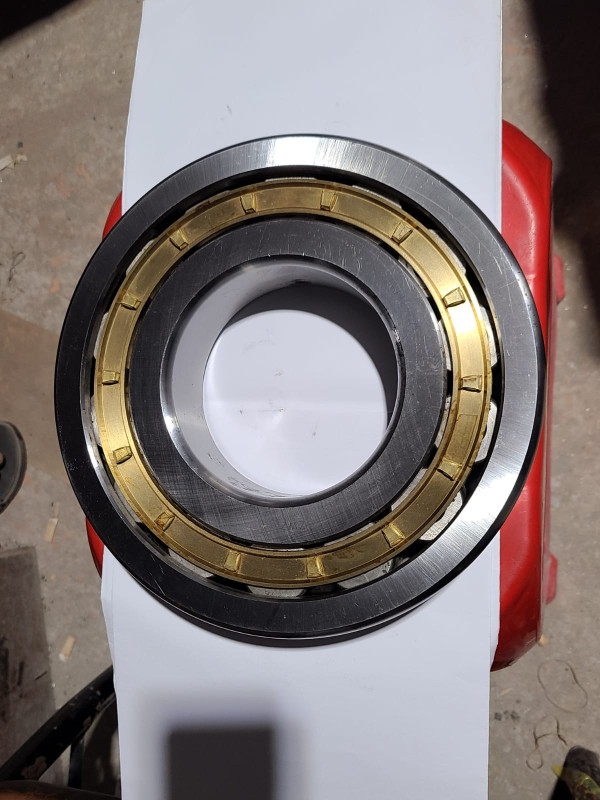
Check the product at Ekra Cargo
In this guide, we’ll cover:
- What cylindrical roller bearings are
- Types of cylindrical roller bearings
- Buying guide
- Product recommendations
- FAQs
Let's get started!
What
Are Cylindrical Roller Bearings?
Cylindrical roller bearings use
cylinders (rollers) to maintain separation between bearing races. They can
support heavy radial loads and operate at high speeds.
Key Features:
- High load capacity
- Low friction
- Can handle thermal expansion
- Ideal for heavy-duty applications
Common
Types of Cylindrical Roller Bearings
Each type is designed for specific
uses. Let’s break them down.
1.
Single-Row Cylindrical Roller Bearings
Best For: General machinery, pumps, and compressors.
Features:
- One row of rollers
- Supports heavy radial loads
- Allows axial displacement
Example:
SKF NU 2205 ECP — Reliable for industrial use.
2.
Double-Row Cylindrical Roller Bearings
Best For: Heavy machinery, electric motors.
Features:
- Two rows of rollers
- Higher radial load capacity
- Improved rigidity
Example:
FAG NJ2310-E-TVP2 — Ideal for machines needing high precision.
3.
Four-Row Cylindrical Roller Bearings
Best For: Steel mills, heavy-duty equipment.
Features:
- Four rows of rollers
- Extremely high load capacity
- Designed for low-speed, high-load operations
Example:
Timken 150RN92 — Perfect for demanding conditions.
4.
Full-Complement Cylindrical Roller Bearings
Best For: Applications where maximum load capacity is needed.
Features:
- No cage
- More rollers fitted
- Handles very high loads but at lower speeds
Example:
INA SL182926 — Great for slow-moving, high-load applications.
5.
Sealed Cylindrical Roller Bearings
Best For: Dirty or contaminated environments.
Features:
- Seals on both sides
- Protects against dirt, dust, and moisture
- Reduced maintenance needs
Example:
NSK NU205EM C3 — Reliable protection with extended bearing life.
Cylindrical
Roller Bearings: Buying Guide
Choosing the right cylindrical
roller bearing can be confusing. Here’s a simple guide:
1.
Load Requirements
- Light to Medium Loads: Single or double-row types.
- Heavy Loads:
Four-row or full-complement types.
2.
Speed of Operation
- High Speeds:
Bearings with cages (single or double-row).
- Low Speeds:
Full-complement bearings.
3.
Environment
- Dusty or Wet Conditions: Choose sealed bearings.
- Clean, controlled environments: Open bearings are fine.
4.
Axial Displacement
Some bearings allow more axial
movement, useful in machines that experience thermal expansion.
5.
Size and Fit
Always check the dimensions
carefully. Incorrect sizing leads to faster wear and tear.
Top
Cylindrical Roller Bearing Recommendations
Here are some trusted products you
can consider:
|
Product |
Pros |
Cons |
|
SKF NU 2205 ECP |
Durable, High precision, Widely
available |
Higher price |
|
FAG NJ2310-E-TVP2 |
Great for high radial loads,
Reliable brand |
Can be hard to find in some
regions |
|
Timken 150RN92 |
Best for heavy loads, Very robust |
Not for high-speed applications |
|
INA SL182926 |
High load capacity, No need for a
cage |
Lower speed capability |
|
NSK NU205EM C3 |
Sealed for protection, Long
lifespan |
Slightly larger size than some
competitors |
Personal
Experience: Why Cylindrical Roller Bearings Matter
When I first started working with
industrial motors, I underestimated the importance of picking the right
bearings. I used a standard ball bearing where a cylindrical roller bearing was
needed. After just two months, the motor failed due to overload.
Switching to a proper SKF
cylindrical roller bearing made a massive difference. The machine ran
smoother, quieter, and lasted longer.
Moral of the story? Choosing the
right bearing saves you time, money, and headaches.
Frequently
Asked Questions (FAQs)
What
is the main difference between ball bearings and cylindrical roller bearings?
Ball bearings are best for light
loads and high speeds. Cylindrical roller bearings are better for heavier
radial loads.
Can
cylindrical roller bearings handle axial loads?
Some types can handle limited axial
loads, but they are primarily designed for radial loads.
How
do I know when a bearing needs replacement?
Look for signs like unusual noise,
vibration, overheating, or visual damage.
Are
sealed bearings better than open bearings?
Sealed bearings are better in dirty
or wet environments. Open bearings are good for clean, monitored areas.
How
long do cylindrical roller bearings last?
With proper installation and maintenance, they can last several years under normal working conditions.
Final Thoughts
Cylindrical roller bearings are
powerful components that keep machines running efficiently. Knowing the types
and how to choose the right one makes all the difference.
Whether you're building a machine
from scratch or replacing a worn-out part, understanding your options will save
you a lot of trouble.
Take your time, choose wisely, and always prioritize quality!


Ekracargo.com - Your trusted partner in industrial efficiency, providing a wide range of premium quality spare parts at competitive prices.
Contact Info
- Address: House 54 | Road 14 | Sector 14 | Uttara | Dhaka 1230 | Bangladesh
- Phone: Contact: +8801634736139 (WhatsApp) ,+8801789394669 (WhatsApp)
- Email: info@ekracargo.com