




Current Transformer Price Guide: Demystifying Costs for Every Project | Best Rates | Buying Guide | Detailed Tips | Maintenance | FAQ |
Current Transformer Price Guide: Demystifying Costs for Every Project
If you're looking to monitor electrical usage, improve energy efficiency, or automate an industrial process, you've likely encountered the current transformer (CT). This humble device is the unsung hero of the electrical world, safely measuring the flow of current without disrupting it. But when you start shopping, one question quickly arises:
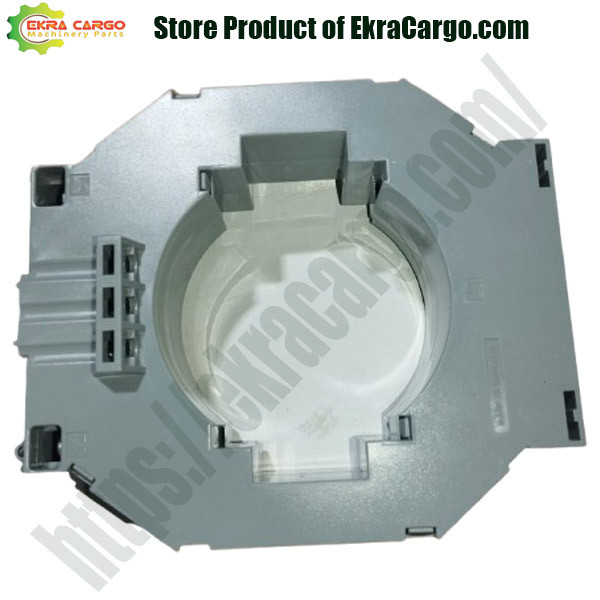
Check the product at Ekra Cargo
Why is there such a huge range in current transformer prices?
A simple CT can cost less than a fancy coffee, while
a high-precision, industrial-grade model can run into hundreds of dollars. This
price variation isn't arbitrary—it's a direct reflection of technology,
materials, accuracy, and application.
This ultimate guide will cut through the confusion.
We’ll break down the factors that influence current transformer price, provide
specific product recommendations across different budgets, and give you a clear
buying guide to ensure you invest in the right tool for your job—not the most
expensive one.
What is a Current Transformer (CT) and Why Do You
Need One?
Before we talk price, let's quickly cover the
basics. A current transformer is a type of instrument transformer designed to
step down high primary current (the current in the wire you're measuring) to a
much lower, manageable, and safe secondary current. The most common output
is 5A or 1A for traditional panels, and 0.333V (333mV) or 0-5V for modern
energy monitors.
You need a CT for two primary reasons:
1.
Safety: It electrically isolates your sensitive monitoring
equipment (like an energy meter or Arduino) from the high-voltage, high-current
main lines.
2.
Practicality: It allows you to measure massive currents (hundreds of
amps) with standard, affordable measuring devices.
Common Applications:
·
Home energy monitoring systems (e.g., Sense, Emporia
Vue)
·
Solar panel production monitoring
·
Sub-metering in apartments and commercial buildings
·
Industrial process control and automation
·
Electrical panel data logging and diagnostics
Key Factors That Dictate Current Transformer Price
Understanding these factors will help you make an
informed decision and understand what you're paying for.
1. Type of CT Construction
This is the biggest driver of cost.
·
Split-Core: These have a hinge mechanism that allows them to be
clipped around a conductor without ever disconnecting the wire. This
convenience and the more complex manufacturing process make them more expensive
than solid-core models. Ideal for: Retrofit installations, DIY energy monitors.
·
Solid-Core (Donut): These are a continuous ring of core material. The
conductor must be disconnected and threaded through the center, making
installation more difficult. They are simpler to manufacture and are typically
the most affordable option. Ideal for: New construction where wires can be easily threaded.
·
Flexible (Rogowski
Coil): These are flexible solenoids that can be
wrapped around conductors of any size and shape. They are excellent for
irregularly shaped busbars and large cables. Prices are generally mid to
high-range due to their specialized nature. Ideal for: Temporary measurements,
large and irregular conductors.
2. Accuracy Class
The precision of the CT is paramount. A Class 0.1 CT
is laboratory-grade and extremely precise, while a Class 3.0 CT is suitable for
basic indication but not for billing or revenue-grade metering. Higher accuracy
requires better materials and more meticulous manufacturing, which increases
the price significantly.
3. Core Material
·
Silicon Steel: A common, cost-effective material used for general-purpose
CTs with standard accuracy (e.g., Class 1.0, 3.0).
·
Nickel-Iron
(Hi-Performance Alloys): Used for
high-accuracy CTs (Class 0.2, 0.5). They have superior magnetic properties and
are less susceptible to phase errors, but they are much more expensive.
·
Ferrite: Often used for high-frequency applications or with modern
electronic meters that use a lower burden.
4. Rated Current & Size
Larger CTs designed to measure thousands of amps
require more material and robust insulation, driving up the cost. A 20A CT will
be far cheaper than a 2000A CT.
5. Brand & Certification
CTs from established, reputable brands (e.g., SEL,
ABB, Hioki) that carry international certifications (UL, CE, IEC) undergo
rigorous testing and quality control. You pay a premium for this reliability
and safety assurance. Generic or unbranded CTs are cheaper but come with more
risk regarding accuracy and longevity.
Current Transformer Price Ranges and Product
Recommendations
Here’s a breakdown of what you can expect to find in
different price brackets.
Budget-Friendly Tier (< $25 per CT)
These are typically unbranded or generic solid-core
CTs found on Amazon, eBay, or AliExpress. They are perfect for hobbyists and
basic DIY projects where ultimate accuracy is not critical.
**Product Example: ** YHDC SCT-013-000 100A/50mA
·
Type: Split-Core (a notable exception in the budget tier!)
·
Rating: 0-100A Input, 0-50mA Output
·
Pros:
o Extremely affordable (usually under $15).
o Split-core design makes installation easy.
o Hugely popular in the Arduino and open-source energy monitoring
community with vast online support.
·
Cons:
o Accuracy is not guaranteed and can vary from unit to unit.
o Build quality can be inconsistent.
o Lacks any formal safety certification (use with caution!).
·
Best For: Hobbyists, students, and proof-of-concept projects where
budget is the primary constraint.
Mid-Range Tier ($25 - $100 per CT)
This tier includes reliable branded products from
companies specializing in test and measurement or energy monitoring. You get
verified accuracy, better build quality, and safety certifications.
**Product Example: ** CR Magnetics CR3110-1000
·
Type: Solid-Core (Donut)
·
Rating: 1000A AC Input, 5A AC Output
·
Pros:
o From a reputable US manufacturer (CR Magnetics).
o High accuracy (Class 1.0).
o UL Listed and CE Certified for safety and reliability.
o Robust construction for long-term industrial use.
·
Cons:
o Solid-core requires disconnecting the conductor to install.
o Higher price point than generic options.
·
Best For: Professional electrical installations, sub-metering
projects, and industrial control panels where reliability and accuracy are
important.
**Product Example: ** Emporia Vue Smart Home Energy Monitor CTs
·
Type: Split-Core (sold as part of a kit)
·
Rating: 200A max, 0.333V output
·
Pros:
o Designed for easy, safe homeowner installation.
o Excellent accuracy when paired with the Emporia Vue monitor.
o Good customer support and warranty.
·
Cons:
o Primarily designed to work with the Emporia ecosystem.
o Sold mostly in kits, though individual CTs can be found.
·
Best For: Homeowners looking for a user-friendly, accurate
whole-home energy monitoring solution.
High-End & Industrial Tier ($100 - $500+ per CT)
This tier is defined by exceptional accuracy, specialized
form factors, and certifications for revenue-grade metering. Brands like SEL,
ABB, and GE dominate here.
**Product Example: ** Flex-Core 5000A Rogowski Coil
·
Type: Flexible Rogowski Coil
·
Rating: 5000A AC, 0-5V DC Output
·
Pros:
o Can measure very high currents on massive, irregularly shaped
conductors.
o Flexible design allows for easy installation in tight spaces.
o High linearity and wide frequency range.
·
Cons:
o Very high cost.
o Often requires an external integrator module.
o Can be more sensitive to external electromagnetic interference.
·
Best For: Large industrial applications, power quality analysis, and
temporary measurements on high-amperage systems.
Your 5-Step Current Transformer Buying Guide
Don't just buy the first CT you see. Follow these
steps to make the perfect choice.
1.
Define Your
Application: Are you a hobbyist, a homeowner, or an
electrician? Is this for a one-time test or permanent installation? Your use
case immediately narrows down the type and price range.
2.
Determine the
Specifications:
o Primary Current: What is the
maximum current you expect to measure? Choose a CT rated for 20-25% higher than
that maximum.
o Output Type: Does your
meter or monitoring device expect a 5A, 1A, or voltage (0.333V/0-5V) output?
Mismatching here will give you completely wrong readings.
o Accuracy Class: Do you need a
ballpark figure (Class 3.0) or a precise measurement for billing (Class 0.5 or
better)?
3.
Choose the Form
Factor: Can you disconnect the wire? If not, you must
choose a split-core or flexible Rogowski coil. If you're building a new panel,
a solid-core CT is a cost-effective choice.
4.
Check for Safety
Certifications: For any permanent installation, especially in
a home or business, insist on UL, CE, or IEC certifications. This is not the
place to cut corners.
5. Consider the Entire System: A CT is useless by itself. Ensure it is compatible with your energy meter, data logger, or microcontroller (with an appropriate burden resistor or interface board).
Current Transformer Offers the Best Value for Your Money
After reviewing the market, it's clear that finding a balance between cost, accuracy, and ease-of-use is challenging. That's exactly why we developed the
Current Transformer."]
At Current Transformer, we designed our Current Transformers to bridge the gap between expensive industrial units and unreliable generic imports. We believe you shouldn't have to choose between safety and affordability.
·
Unmatched Value: Our split-core CTs offer a certified Class 0.5 accuracy at a price
point typically reserved for unrated models.
·
Safety First: Every unit is UL
and CE certified, giving you peace of mind for permanent
installation in your home or business.
·
Plug-and-Play Compatibility: We offer a range of output options (5A, 1A, 0.333V) to
ensure seamless integration with all major energy monitors, including [List
compatible systems, e.g., Sense, Emporia, Home Assistant].
· Built to Last: Featuring a robust, heat-resistant housing and a secure clasp mechanism, the Current Transformer is designed for decades of reliable service.
You don't need to gamble on a cheap CT or overpay
for features you don't need. The [Your Product Name] provides
professional-grade performance at a DIY price, making it the smartest choice
for your energy monitoring project.
Check product at Ekra Cargo
Conclusion: Investing in the Right Measurement
The "current transformer price" is more
than just a number; it's a reflection of quality, safety, and precision. While
it's tempting to grab the cheapest option, investing in a well-made,
appropriately specified CT from a reputable source will save you from
headaches, inaccurate data, and potential safety hazards down the line.
By understanding the factors that influence cost and following our buying guide, you are now equipped to make a confident decision. Whether you're powering a homemade project or managing a factory's energy load, the right current transformer is out there, ready to give you insight into the invisible flow of electricity.


Ekracargo.com - Your trusted partner in industrial efficiency, providing a wide range of premium quality spare parts at competitive prices.
Contact Info
- Address: House 54 | Road 14 | Sector 14 | Uttara | Dhaka 1230 | Bangladesh
- Phone: Contact: +8801634736139 (WhatsApp) ,+8801789394669 (WhatsApp)
- Email: info@ekracargo.com