




Your Friendly Guide to Essential Chemistry Lab Equipment | Best Rates | Buying Guide | Detailed Tips | Maintenance | FAQ |
Your Friendly Guide to Essential Chemistry Lab Equipment
Entering
a chemistry lab can be overwhelming. The glassware rests on shelves in bizarre
sizes and shapes, and you can't help but wonder, "What in the world is
this for?" If you are a first-year science student, a hobbyist creating a
home laboratory, or a working professional who wishes to refresh your skills,
educating yourself on your equipment is the key to discovery.
This guide will walk you through the most common chemistry lab equipment, what they are, how they're used, and how to choose the best ones. Let's make your lab less mysterious!

Check Some Medical Products at Ekra Cargo
The
Essential Glassware: The Workhorses of the Lab
Chemical
reactions and preparations for the most part occur in glassware. It doesn't
react, withstands heat, and is transparent so that you can see what's happening
within.
Beakers
The
classic spouted cylindrical vessel. They are not intended to be precisely
measured but are perfect for mixing, heating, and holding liquids.
Standard
Sizes: 50 mL, 250 mL, 500 mL, 1000 mL
Best
Suited For: Coarse estimations of volume, preparing solutions, and performing
reactions.
Erlenmeyer
Flasks
These
can be recognized by their conical form and slender, cylindrical neck. The
tapered form renders them ideal for swirling liquids with no fear of splashing.
Easy stoppering can also be achieved through the neck.
Common
Sizes: 125 mL, 250 mL, 500 mL
Best
Suited For: Titrations, growing microorganisms, and solution mixing that might
bubble or splash.
Volumetric
Flasks
These
are for precision. They have a long neck with a calibration line on it. They are
used to prepare solutions of known concentration.
Pro
Tip: Always fill to the mark at room temperature and have the bottom of the
meniscus (the concave surface of the liquid) at the same level as the mark.
Best
For: Preparing standard solutions with very high precision.
Graduated
Cylinders
These
are your standard for precise measurement of liquid volumes superior to a
beaker but less precisely than a volumetric flask. They are tall and thin,
which allows for maximal precision in measurement.
Best
For: Measuring liquid volumes for which very high precision is not necessary.
Test
Tubes
Little
finger-shaped tubes for holding, mixing, or heating small volumes of reagents.
They are often used in racks and can be stoppered.
Best
For: Small-scale reactions, qualitative testing, and observation.
Heating
& Mixing Equipment: The Action Starters
Bunsen
Burner
A
standard item in any traditional lab, this gas-fired burner provides a clean,
hot, and isolated flame to work with for heating, sterilizing, and burning.
How
it works: It mixes natural gas with air, allowing a controlled flame with a
very high temperature.
Safety
First: Always ignite with a sparker, never a match. Tie back long hair and be
careful about what is close to the flame.
Hot
Plates & Magnetic Stirrers
A
clean and more secure alternative to open flames. A hot plate offers electric
heat, and a lot of them have an integrated magnetic stirrer. You insert a small
magnetic stir bar into your flask or beaker, and the revolving magnet that is
hidden beneath the plate churns it around, stirring your solution smoothly and
hands-free.
Best
For: Heating flammable solvents without risking them going up in flames and for
having a consistent, steady stir.
Product
Recommendation: Corning PC-420D Hot Plate Stirrer
Pros:
Durable, reliable, excellent stirring and heating capability, ceramic surface
that is easy to clean.
Cons:
Higher cost, might be too heavy.
Best
For: Serious home enthusiasts and commercial labs that need precision and
reliability.
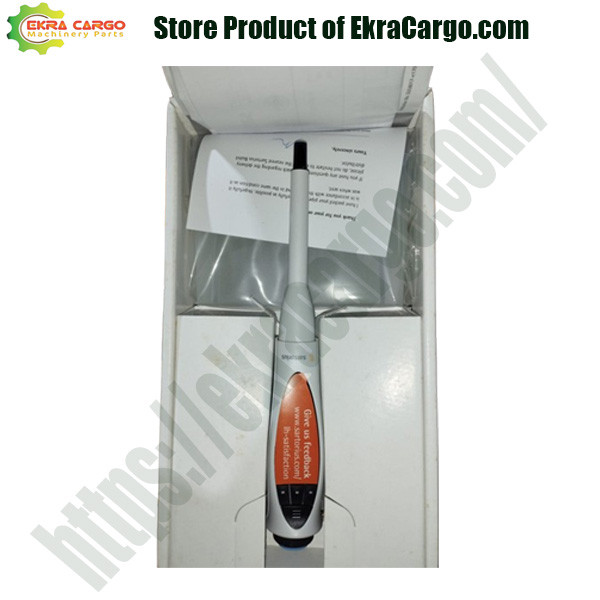
Measuring
& Analysis Tools: Precision Instruments
Pipettes
They
are used to transfer very precise quantities of liquid. They come in many
formats:
Volumetric
Pipettes: For one very precise volume (e.g., 25.00 mL).
Mohr
Pipettes: Graduated and used to determine variable quantities.
Micropipettes:
To handle little quantities (microliters, μL), common in biochemistry and
biology laboratories.
Burettes
A
long, graduated glass tube with a delicate stopcock (valve) at one end. They
are utilized in titration, in which you slowly add one solution to another to
quantify concentration.
Pro
Tip: You should always wash a burette with the solution you will put inside it
to avoid dilution errors.
Balances
No
laboratory would be complete without a balance. Analytical balances are precise
to 0.0001 g and should be employed in quantitative work. Top-loading balances
are less precise but more robust for routine weighing.
Best
Practice: Always have the pan covered by weighing boats or paper. Calibrate
regularly!
pH
Meter
This
is an electronic instrument that measures the acidity or alkalinity (pH) of a
solution. It's more precise and handy to use than pH paper for most
applications.
Pro
Tip: Keep the electrode always in a proper storage solution and first calibrate
it before using it with regular buffer solutions.
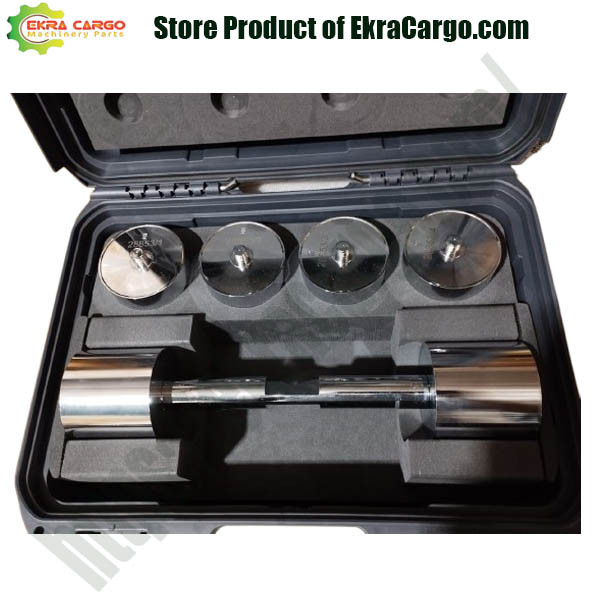
Product
Recommendation: Aculab Portable Precision Balance (0.001g)
Advantages:
Cheap, portable, sufficient precision for most household and student
applications, comes with protective cover.
Cons:
Not appropriate for highly sophisticated analytical work demanding 0.0001g
accuracy.
Best
For: Students, home chemists, and schools requiring an affordable, dependable
balance.
Safety
Equipment: Your Non-Negotiable Gear
Safety
first. Never skimp on these items.
Safety
Goggles: Wear ALWAYS. They guard your eyes against splashes, fumes, and
airborne fragments. Regular glasses are NOT enough.
Lab
Coat: Shields skin and clothing from chemical splashes and stains.
Gloves:
Wear the appropriate chemical-resistant gloves (e.g., nitrile, neoprene) for
what you're doing.
Fume
Hood: A ventilated box in which to work with volatile, toxic, or malodorous
chemicals. If it smells, it's going in the hood!
Buying
Guide: How to Choose Your Lab Equipment
Setting
up a lab? Here's what you need to consider:
Your
Application: Are you doing simple experiments, advanced syntheses, or precise
analytical work? A student doesn't need an analytical balance that costs
$2,000.
Material:
Borosilicate
Glass (e.g., Pyrex): The crème de la crème. It is very resistant to thermal
shock and chemical etching. Heat only with borosilicate.
Plastic
(PP, PMP): Great for students or for working with hydrofluoric acid, which
dissolves glass. It is not shatterable but usually not heat-resistant.
Budget:
You get what you pay for. Fine-grade borosilicate glass produced by companies
such as Pyrex (Corning) or Kimax will last for decades. Soda-lime glass at a
lower cost will be more prone to breaking under thermal stress.
Brand
Reputation: For critical items, utilize respected brands with established
quality and precision (e.g., Corning, BrandTech, Eppendorf for pipettes,
Mettler Toledo for balances).
A
Personal Note: When I first heated a beaker of water, the glass broke because
of thermal shock. I learned the hard way that paying a little extra for proper
borosilicate glass is cheaper than replacing broken equipment and safer than cleaning
up a chemical and glass shard disaster.
Frequently Asked Questions (FAQs)
Q:
What is the most important single item of safety equipment?
A:
Your attitude! But if you are talking about equipment, safety glasses are quite
simply the most important. Your eyes can't be replaced.
Q:
Can I use kitchen equipment for chemistry?
A:
It is not recommended. Kitchen equipment can absorb poisonous chemicals and
become a genuine poisoning hazard to you and others in your household. Lab
equipment is designed to be chemically inert and easy to decontaminate.
Q:
How is accuracy different from precision?
A:
Accuracy is how close a measurement is to the true value. Precision is how
close multiple measurements are to each other. A volumetric flask is precise
and accurate. A beaker is not.
Q:
How do I clean lab glassware properly?
A:
Clean with solvent or water when finished. Brush with laboratory-dedicated
detergent like Alconox for stubborn residues. Rince thoroughly with distilled
water to avoid contamination.
Q:
Where do I buy chemistry lab equipment?
A: Students and beginners can purchase decent starter kits at online stores like Home Science Tools and Amazon. Professionals and for higher-quality standalone pieces, scientific suppliers like Cole-Parmer, VWR, and Thermo Fisher Scientific are the industry benchmarks.
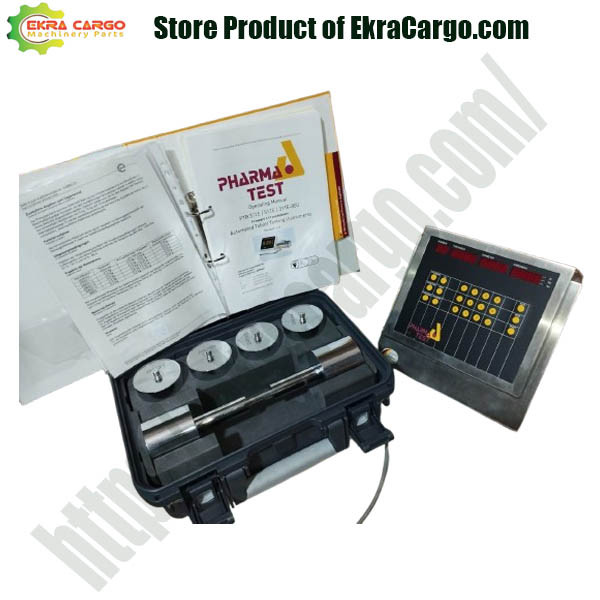
Check Medical Items at Ekra Cargo
Equipping
yourself with the right knowledge is just as important as equipping your lab
with the right tools. By understanding what each piece of equipment does and
how to use it safely, you’re setting yourself up for successful and rewarding
experiments. Now go explore


Ekracargo.com - Your trusted partner in industrial efficiency, providing a wide range of premium quality spare parts at competitive prices.
Contact Info
- Address: House 54 | Road 14 | Sector 14 | Uttara | Dhaka 1230 | Bangladesh
- Phone: Contact: +8801634736139 (WhatsApp) ,+8801789394669 (WhatsApp)
- Email: info@ekracargo.com