





Centrifugal Pump Impeller Types A Beginner's Guide | Best Rates | Buying Guide | Detailed Tips | Maintenance | FAQ |
Centrifugal
Pump Impeller Types: A Beginner's Guide
As a mechanical engineer, maintenance technician, or hobbyist working with fluid systems, choosing the right centrifugal pump impeller is crucial. The impeller is the lifeblood of the pump—it propels the fluid and defines the pump's efficiency, flow rate, and longevity.

Check the product at Ekra Cargo
In this article, we’ll explore the different types
of centrifugal pump impellers, their pros and cons, typical applications, and
how to pick the best one for your system. Plus, we’ll recommend a few reliable
products and share some hands-on experience.
What
Is an Impeller in a Centrifugal Pump?
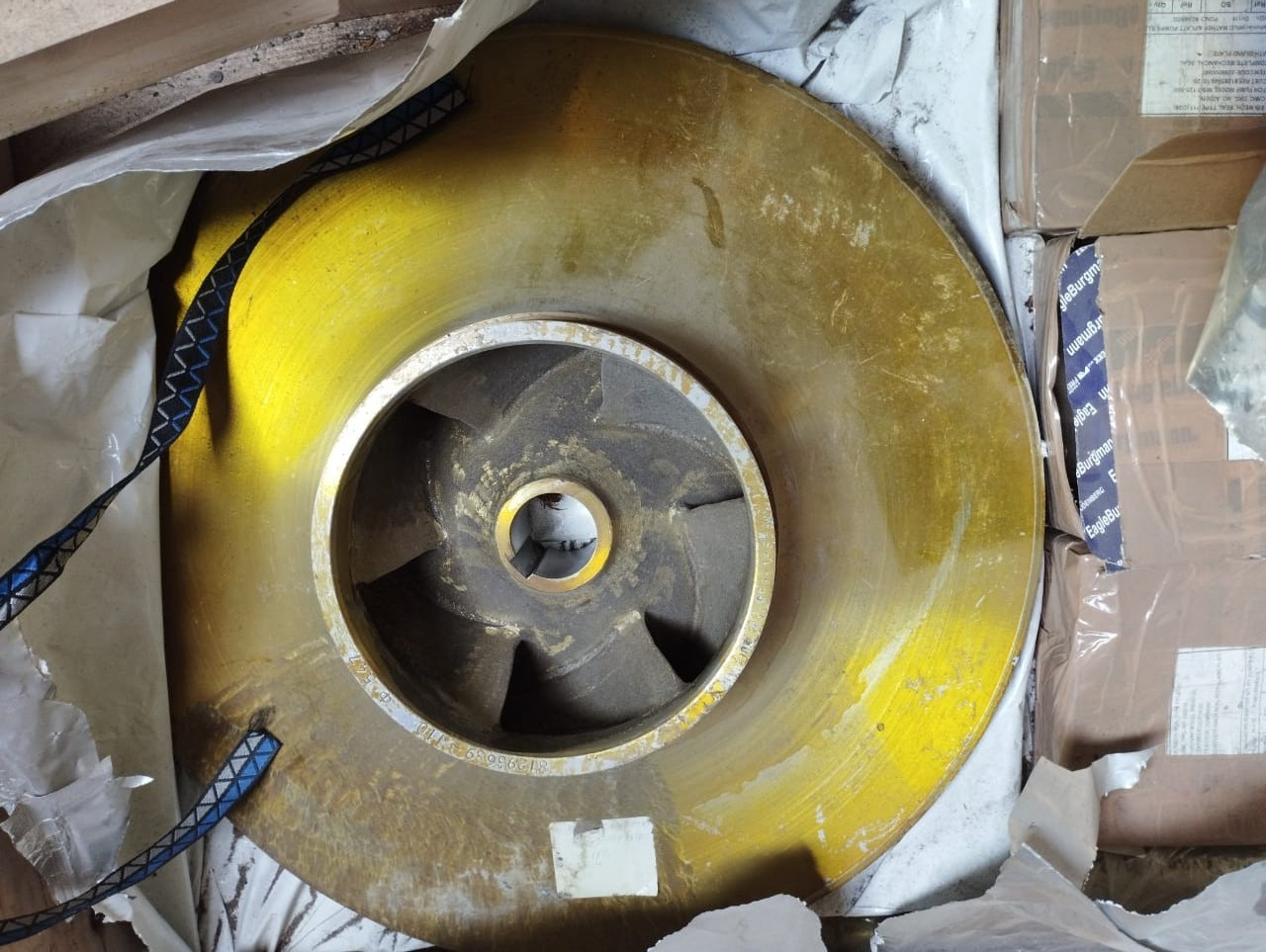
An impeller is a rotating component of a centrifugal
pump that transfers energy from the motor to the fluid. When the impeller
rotates, it pushes the fluid from the pump center, increasing velocity and
pressure.
Centrifugal
Pump Impeller Types
There are three general types of impellers used in centrifugal pumps:
1. Open Impeller
Design:
Blades bolted to a central hub
No side walls
Easy to clean, simple
Advantages:
Suitable for solids and debris pumping
Easier maintenance and inspection
Lighter in weight
Disadvantages:
Less efficient
Less wear-resistant and more susceptible to wear
Not suitable for high-pressure application
Typical Applications:
Agricultural irrigation
Agriculture and animal waste treatment
Slurry pumping
Food processing
2. Semi-Open Impeller
Design:
Partially shrouded blades on one side
Provides a balance between the open and closed design
Advantages:
Pumps suspended solids and small solids
More efficient compared to an open impeller
Structural strength added
Disadvantages:
Needs precise clearance settings
More difficult to maintain than an open impeller
Typical Applications:
Food processing
Chemical transfer
Light industrial liquids
3. Closed Impeller
Design:
Closed on the sides with front and back wall
Fluid travels between impeller blades and walls
Advantages:
Highest in efficiency
Most suited for clean liquids
Most suitable for high head applications
Disadvantages:
Prone to clog by solids
Harder to clean and maintain
More expensive
Typical Applications:
Circulation of clean water
HVAC application
Oil & gas pipeline
Comparison Table
Feature\\\\tOpen Impeller\\\\tSemi-Open
Impeller\\\\tClosed Impeller
Solid Handling\\\\tExcellent\\\\tModerate\\\\tPoor
Efficiency\\\\tLow\\\\tMedium\\\\tHigh
Maintenance Ease\\\\tHigh\\\\tMedium\\\\tLow
Cost\\\\tLow\\\\tModerate\\\\tHigh
Ideal Fluids\\\\tDirty / Slurry\\\\tSlightly Dirty\\\\tClean / Clear
Recommended
Products
1. Grundfos CRN Pump with Closed Impeller
Advantages:
Higher in efficiency
Rugged stainless steel construction
Well-suited for clean water applications
Cons:
More expensive
Not suitable for solids
Best For: Clean water transfer, commercial buildings
2. Pentair Myers S Series with Open Impeller
Pros:
Better suited for dirty water
Easy to disassemble and clean
Affordable
Cons:
Less efficient in flow
May wear more rapidly
Best For: Wastewater, stormwater collection systems
3. Ebara Model 3U Semi-Open Impeller Pump
Pros:
Stainless steel construction
Good balance between efficiency and solids handling
Versatile uses
Cons: May require intermittent clearance adjustments
Best For: Light industrial use, chemical transfer
Buying
Guide: How to Choose the Correct Impeller Type
Choosing the correct impeller is more than choosing one with highest efficiency. The following considerations are significant:
Type of Fluid
Clean fluid → Closed impeller
Dirty fluid, slightly → Semi-open impeller
Solids or slurry → Open impeller
Maintenance Functionality
Easy maintenance required? Choose open or semi-open
Closed impellers are harder to maintain
Efficiency Demand
In energy-saving applications, closed impellers are best
Open or semi-open can be for light-duty or intermittent service
Budget
Open impellers are economical
Closed impellers pay for themselves in the long run
with efficiency
My
Personal Experience
We specified open impeller centrifugal pumps on a municipal wastewater project. Why? Because they will pass grit, debris, and rags without clogging. Maintenance was simple—just unbolt the casing and clean.
In a pharma factory, we used closed impeller stainless steel pumps only. The fluids were ultra clean and energy efficiency was of top concern. Performance was excellent but cleaning required downtime and precision.
❓ Frequently Asked Questions (FAQs)
Q1:
Can I use a closed impeller for dirty water?
A: Not advisable. Closed impellers clog with solids.
Use an open or semi-open impeller for dirty water.
Q2:
Which is the most energy-efficient impeller?
A: The closed impeller. It provides the greatest
hydraulic efficiency but is suitable for clean liquids only.
Q3:
Do impellers ever get "worn out"?
A: Yes. Particularly in corrosive or abrasive
applications. Proper monitoring and prompt replacement are the secrets to pump
life.
Q4:
Can I swap impeller types on an installed pump?
A: Yes, in some cases—but it's design specific.
Always consult the manufacturer or an expert competent enough before making any
modifications.
Q5:
Why are clearances important to semi-open impellers?
A: Because the impeller to casing clearance affects
efficiency and performance. Too big = energy lost; too tight = wear and
friction.
Final
Thoughts
Selecting the correct centrifugal pump impeller is a compromise of efficiency, fluid characteristics, maintainability, and cost. There's an impeller design for any occasion:
Open for dirty liquids
Semi-open for moderate solids service
Closed for clean, high-efficiency service
Always think of your system requirements prior to
choosing an impeller. The right-matched impeller not only conserves energy but
also costly downtime and maintenance.


Ekracargo.com - Your trusted partner in industrial efficiency, providing a wide range of premium quality spare parts at competitive prices.
Contact Info
- Address: House 54 | Road 14 | Sector 14 | Uttara | Dhaka 1230 | Bangladesh
- Phone: Contact: +8801634736139 (WhatsApp) ,+8801789394669 (WhatsApp)
- Email: info@ekracargo.com