




buck boost converter
Understanding the Buck-Boost Converter: A Simple Guide
These days, everything is electronically controlled. From your phone to your computer and the car you're driving, it requires power. Buck-boost converter happens to be one of the crucial parts of many of these electronics. This guide will explain in simplistic terms all that surrounds the buck-boost converter, especially to a curious individual who has ever been left wondering how devices actually manage their power or wanted in-depth knowledge of what constitutes an electronic gadget.
What is a Buck-Boost Converter?
A buck-boost converter is an electrical device that changes the voltage of electricity. It can either increase the voltage, known as boost, or decrease it, known as buck, depending on what the device requires. This is very useful when the power source, such as a battery, has a voltage that isn't perfect for the device.
For example, consider a flashlight that needs 5 volts to operate. Your batteries, however, can provide only 3 volts at their weakest and 7 volts at their fullest. A buck-boost converter ensures that the flashlight will always see 5 volts from the battery, no matter its charge state.
How Does a Buck-Boost Converter Work?
A buck-boost converter works on the simple principle of fast switching on and off a part called a transistor, thereby controlling the flow of electricity. In detail, the process goes like this:
Energy Storage: When the transistor is ON, energy is stored in a coil called an inductor.
Energy Release: When the transistor is OFF, the inductor releases this energy, adjusting the voltage as needed.
Output Voltage: It controls the switch transistor, to increase or decrease the time in order to provide stable output voltage. This switch does so many thousands of times, and even millions in a second, thereby making this converter efficient by not losing much energy.
Major Components of Buck-Boost Converter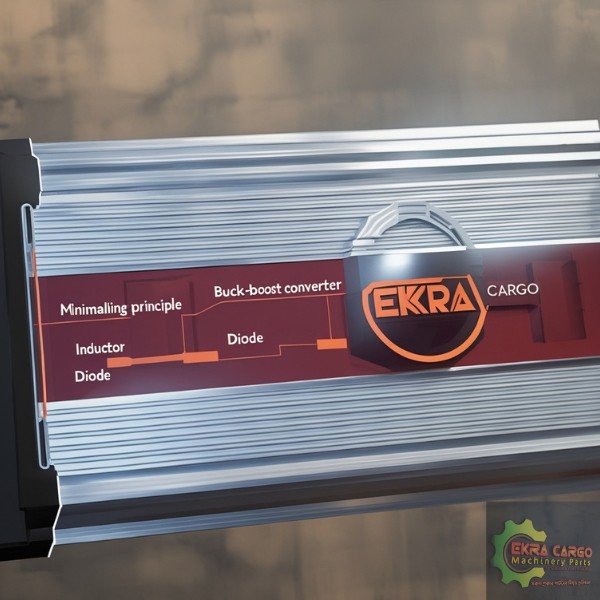
To understand how a buck-boost converter works, let's look at the main parts:
Inductor:
This part stores and releases energy to change the voltage.
Switch
(Transistor): It controls the flow of electricity.
Diode:
This part ensures electricity flows in the right direction.
Capacitor:
It helps smooth the voltage, making sure there are no sudden jumps in power.
Controller Circuit:
This part controls the switch timing to ensure that all operations work as they are supposed to.
Types of Buck-Boost Converters
There exist two major classes of buck-boost converters:
Non-Inverting Buck-Boost Converter:
The polarity of the output voltage is in the same direction as that of the input voltage.
Inverting Buck-Boost Converter:
The polarity of the output voltage is opposite that of the input voltage.
Each is used for different purposes with respect to the requirements of a device.
Where Are Buck-Boost Converters Used?
They are used almost everywhere. Here are a few examples:
Battery-Powered Devices:
Smartphones
Laptops
Power banks
Car Electronics:
Electric cars
LED lighting systems
Renewable Energy:
Solar panels
Wind turbines
Industrial Devices:
Sensors
Internet of Things (IoT) devices
In all these cases, the buck-boost converter ensures that the device receives an appropriate amount of power, irrespective of how the battery or power source is varied.
Image Placement: Include pictures of devices such as smartphones, solar panels, and electric vehicles that use buck-boost converters.
Advantages of Buck-Boost Converters
Buck-boost converters hold a high popularity due to the following advantages they offer:
Versatility:
They operate on both higher and lower input voltages.
Efficiency:
They are designed to utilize energy efficiently and waste less power.
Compact Size:
Their small size makes them perfect for portable devices.
Cost-Effective:
They reduce the need for multiple power sources, saving money.
Disadvantages of Buck-Boost Converters
Even though very useful, buck-boost converters have some drawbacks, including:
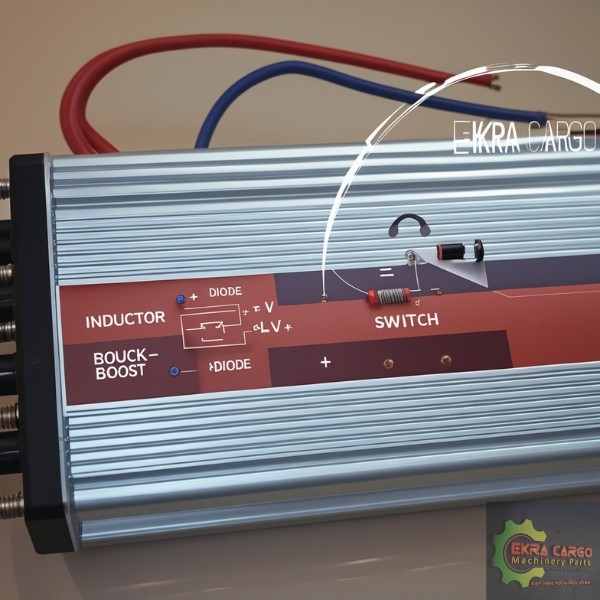
Complexity:
They require careful control to work properly.
Noise:
The fast switching can create unwanted electrical noise.
Efficiency Drop:
When the input and output voltages are very different, the converter may not be as efficient.
How to Choose a Buck-Boost Converter
When it comes to choosing a buck-boost converter for your project, here are things to think about:
Input Voltage Range: Make sure the converter can handle the range of voltages you’ll be using.
Output Voltage and Current: Check if it can provide the voltage and current your device needs.
Efficiency: Choose a converter with high efficiency to save energy.
Size and Cost: Pick one that fits the size and cost of your project.
Noise: If electrical noise is a problem, choose a design that minimizes it.
Examples of Popular Buck-Boost Converter ICs
Following are a few examples of popular ICs that are widely used in buck-boost converters:
LM2596: Commonly used for basic applications.
XL6009: Known for being efficient and versatile.
TPS63060: A high-performance IC used in advanced systems.
These ICs ease the use of buck-boost converters in various projects.
How to Design a Buck-Boost Converter
To design your buck-boost converter, you will have to follow these steps:
Calculate Requirements: Calculate the input voltage range, output voltage, and current your device requires.
Choose Components: You will have to choose an appropriate inductor, capacitor, diode, and switching element (transistor).
Test the Circuit: Test your design to ensure that it functions appropriately and is efficient.
There are many free online tools, such as LTspice, which can help you design and simulate your circuit.
The Future of Buck-Boost Converters
As technology is improving day by day, buck-boost converters are also improving. New materials being used, like Gallium Nitride transistors, have made them more efficient and powerful. These will continue to make buck-boost converters even more useful for things like wearable devices and electric vehicles in the future.
Conclusion
The buck-boost converter is the backbone of modern electronics. They help a device get its accurate power, even when there will be changes in the input voltage. Whether it is simple or complex, knowing how such a buck-boost converter works will be able to enable you to make your device more efficient.
With all these converters, the tendency will be to keep advancing through technology, getting stronger for the common devices used at every moment.
Condition: Factory New Sealed Availability: In Stock Ships: Fast and Reliable Shipping Factory New Sealed Without Warranty
Ask Our Experts
Category/Spare Parts: Generator | Automation | Textile | Spinning | Network | Telecommunication | Compressor | Marine | Electrical | Motors | Medical | Mechanical | Sports | Agriculture | |


Ekracargo.com - Your trusted partner in industrial efficiency, providing a wide range of premium quality spare parts at competitive prices.
Contact Info
- Address: House 54 | Road 14 | Sector 14 | Uttara | Dhaka 1230 | Bangladesh
- Phone: Contact: +8801634736139 (WhatsApp) ,+8801789394669 (WhatsApp)
- Email: info@ekracargo.com