




Your Complete Guide to Biochemistry Analyzers: How They Work and How to Choose One | Best Rates | Buying Guide | Detailed Tips | Maintenance | FAQ |
Your Complete Guide to Biochemistry Analyzers: How They Work and How to Choose One
Ever wondered what happens to your blood sample after it's drawn? The magic happens inside a powerful machine called a biochemistry analyzer. This workhorse of the modern medical laboratory is crucial for diagnosing disease, monitoring health, and guiding treatment decisions.
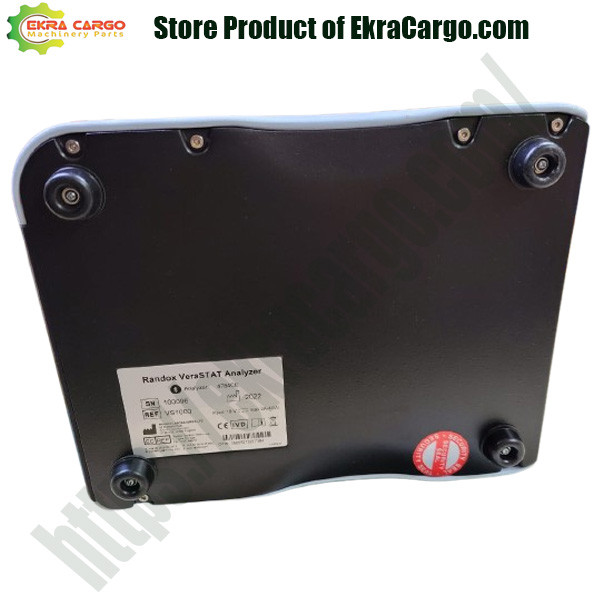
Check the product at Ekra Cargo
If you're a medical student, a lab technician, or a
clinic owner looking to purchase one, this guide is for you. We'll break down
this complex technology into simple, easy-to-understand concepts. We'll cover
how it works, why it's important, and what you should look for when buying one.
What is a Biochemistry Analyzer? The Basics
In simple terms, a biochemistry analyzer (or
clinical chemistry analyzer) is a computerized instrument that measures the
concentration of certain chemical substances in a liquid sample, most often
blood serum or plasma.
Think of it as a highly sophisticated detective. It
takes a tiny sample and runs dozens of tests to find clues about your health.
These clues are substances like:
·
Glucose (for diabetes)
·
Cholesterol and triglycerides (heart health)
·
Electrolytes (sodium, potassium - for kidney and hydration status)
·
Liver enzymes (AST, ALT - for liver function)
·
Kidney markers (creatinine, BUN - for kidney function)
·
Hormones and proteins
By accurately measuring these levels, doctors can
get a clear picture of how your organs are functioning.
How Does a Biochemistry Analyzer Work? The Science
Made Simple
While the engineering is complex, the core principle
is based on a simple concept: photometry. Most analyzers measure how much light a liquid sample absorbs.
Here’s a simplified step-by-step process:
1.
Sample Loading: A small sample of blood serum is placed in a tiny cup or
on a special carrier.
2.
Reagent Mixing: The analyzer automatically adds specific chemical reagents
(test chemicals) to the sample. These reagents are designed to react with the
target substance (e.g., glucose).
3.
The Reaction: This reaction often creates a colored compound. The more
of the target substance present, the more intense the color becomes.
4.
The Measurement: A light beam of a specific wavelength is shone through the
now-colored liquid. A detector on the other side measures how much light is
absorbed.
5.
The Calculation: The analyzer's computer uses the amount of light absorbed
to calculate the exact concentration of the substance in the sample, using a
principle known as the Beer-Lambert Law.
6.
Reporting: The final result is printed out or sent directly to the
lab's computer system for a doctor to review.
Modern analyzers automate this entire process,
handling hundreds of samples per hour with incredible precision.
Types of Biochemistry Analyzers: Which One is Right
for Your Lab?
Not all analyzers are created equal. They are
generally categorized into three types based on their level of automation.
1. Semi-Automated Analyzers
These are ideal for small clinics, doctor's offices,
or veterinary practices. They require some manual steps, like pipetting the
sample and reagents.
·
Pros: Affordable, compact, low maintenance, low reagent
consumption.
·
Cons: Slower, requires more hands-on work from a technician,
lower throughput.
2. Fully Automated Analyzers
These are the giants of hospital and large reference
labs. They handle everything from sample loading to waste disposal with minimal
human intervention.
·
Pros: Extremely high speed and throughput, walk-away automation,
high precision, can run multiple tests on one sample simultaneously.
·
Cons: Very expensive (both instrument and reagents), large
footprint, requires specialized training and maintenance.
3. Point-of-Care (POC) Analyzers
These are small, portable devices used at a
patient's bedside, in an ambulance, or in a remote clinic. They provide results
in minutes.
·
Pros: Portability, very fast results, easy to use.
·
Cons: Limited test menu, higher cost per test, generally less precise
than core lab analyzers.
Key Features to Consider: Your Buying Guide
Choosing the right analyzer is a big decision.
Here’s what you need to evaluate:
·
Test Menu: Does it offer all the tests your patients need? (e.g.,
Liver panel, renal panel, lipids, diabetes).
·
Throughput: How many tests can it run per hour? Match this to your
lab's daily sample volume.
·
Sample Volume: How much blood/serum is required per test? Smaller volumes
are better for pediatric and geriatric patients.
·
Ease of Use: Is the software intuitive? How much training is required?
·
Reagent System: Are reagents open (can use third-party reagents) or closed
(must use manufacturer's reagents)? Closed systems are often more reliable, but
open systems can be cheaper.
·
Footprint: How much bench space does it require? Measure your lab
space!
·
Service &
Support: What is the manufacturer's reputation for
technical support and maintenance? This is critical.
Product Recommendations: A Quick Comparison
Here’s a look at a few popular models across
different categories.
1. For Small Clinics /
Semi-Auto: Mindray BA-88A
·
Pros: Excellent reputation, very user-friendly, robust
construction, good basic test menu, open reagent system.
·
Cons: Lower throughput than automated systems, not suitable for
high-volume labs.
·
Best for: Private clinics, small hospitals, veterinary practices
starting out.
2. Mid-Range Workhorse /
Fully-Auto: Beckman Coulter AU480
·
Pros: A proven and reliable system from a top brand, great
throughput for its class, excellent precision, comprehensive test menu.
·
Cons: Higher initial investment, requires more space, uses
proprietary (closed) reagents.
·
Best for: Medium-sized hospital labs and large group practices.
3. Point-of-Care Option: Abbott
i-STAT
·
Pros: Handheld and incredibly portable, provides results in 2-10
minutes, uses single-use cartridges, very simple operation.
·
Cons: High cost per test, limited test menu per cartridge.
·
Best for: Emergency rooms, ICUs, ambulances, and remote care
settings.
A Note from Experience: The Human Touch
Having worked with these machines, I can tell you
that the analyzer is only as good as the technician operating it. Regular
maintenance, calibration, and quality control are non-negotiable. The machine
provides a number, but an experienced professional interprets that number in
the context of the patient's story. It's a powerful partnership between human
and machine that truly drives modern medicine forward.
Frequently Asked Questions (FAQs)
Q: How often does a biochemistry
analyzer need to be calibrated?
A: It depends on the test and the manufacturer's guidelines.
Some tests require daily calibration, while others are stable for weeks. Most
modern analyzers will alert you when calibration is due.
Q: What's the difference between
a biochemistry analyzer and an immunoassay analyzer?
A: A great question! Biochemistry analyzers typically measure
smaller molecules (glucose, enzymes, electrolytes) using photometry.
Immunoassay analyzers measure larger molecules (hormones, cancer markers,
vitamins) using antigen-antibody reactions. Many large "integrated"
systems now combine both technologies in one machine.
Q: How long does it take to get
results?
A: On a fully automated analyzer, most common chemistry tests
are completed and reported within 10-30 minutes of loading the sample.
Point-of-care devices can give results in 2-5 minutes.
Q: Are the results reliable?
A: Yes, when performed in a certified laboratory. Labs run
quality control samples multiple times a day to ensure the analyzer is
providing accurate and precise results. This is a cornerstone of clinical lab
science.
Q: Can one machine run all blood
tests?
A: No. While modern analyzers are incredibly versatile, a
complete blood count (CBC) is performed on a different type of machine called a
hematology analyzer. Microbiology tests (for infections) require yet another
set of equipment.

Check product at Ekra Cargo
Conclusion
Biochemistry analyzers are silent guardians of our health. They transform a small vial of blood into a detailed report card of our internal health, enabling early diagnosis and effective treatment. Whether you're a healthcare professional choosing equipment or a patient curious about your care, understanding this technology demystifies an essential part of modern medicine. By considering your needs, budget, and the factors in this guide, you can find the perfect analyzer to serve your patients and your practice.


Ekracargo.com - Your trusted partner in industrial efficiency, providing a wide range of premium quality spare parts at competitive prices.
Contact Info
- Address: House 54 | Road 14 | Sector 14 | Uttara | Dhaka 1230 | Bangladesh
- Phone: Contact: +8801634736139 (WhatsApp) ,+8801789394669 (WhatsApp)
- Email: info@ekracargo.com