




The Complete Guide to Automated Laboratory Equipment: Revolutionize Your Lab | Best Rates | Buying Guide | Detailed Tips | Maintenance | FAQ |
The Complete Guide to Automated Laboratory Equipment: Revolutionize Your Lab
In the fast-paced world of modern science, efficiency, accuracy, and reproducibility are not just goals—they are necessities. Laboratories are under constant pressure to deliver higher-quality data, faster results, and more groundbreaking discoveries, all while managing tight budgets and overcoming skilled labor shortages. If your team is drowning in manual pipetting, plagued by human error, or struggling to scale operations, it’s time to explore a transformative solution: automated laboratory equipment.
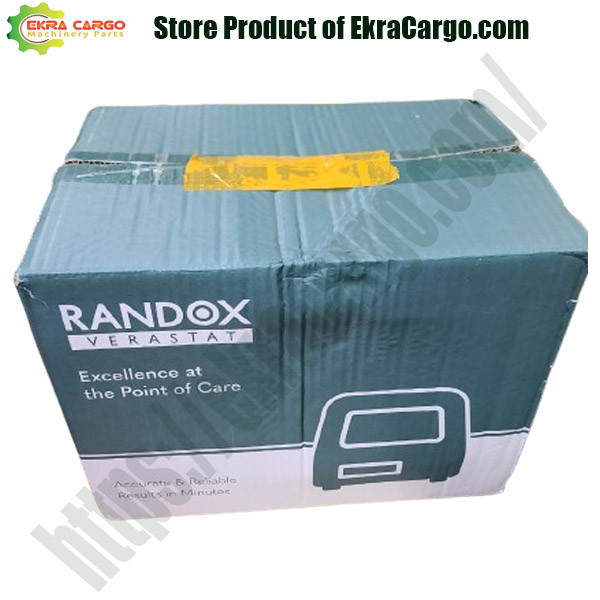
Check the product at Ekra Cargo
This comprehensive guide will walk you through
everything you need to know about lab automation. We’ll explore its undeniable
benefits, break down the different types of systems available, provide a
detailed buying guide, and review some of the top products on the market to
help you make an informed decision for your lab’s future.
Why Automate? The Compelling Benefits of Automated
Laboratory Equipment
Automation is more than just a fancy gadget; it's a
strategic investment that pays dividends across every aspect of your
laboratory's operations.
1.
Unmatched Precision
and Accuracy: Human error is an inevitable part of manual
processes. A slight hand tremor, a misread volume, or simple fatigue can
compromise an entire experiment. Automated systems perform tasks with robotic
precision, ensuring consistent and reproducible results every single time,
which is the bedrock of reliable scientific data.
2.
Dramatically
Increased throughput: Automation
allows your lab to operate 24/7 without breaks, vacations, or shifts. By
running experiments overnight and on weekends, you can achieve weeks' worth of
manual work in a single day. This is crucial for high-volume testing
facilities, drug discovery pipelines, and genomics research.
3.
Significant Cost
Reduction: While the initial investment can be
substantial, the long-term savings are profound. Automation reduces:
o Labor Costs: Frees highly
skilled scientists from repetitive tasks to focus on higher-value analysis,
interpretation, and experimental design.
o Reagent Costs: Precise liquid
handlers use only the required volumes of often expensive reagents.
o Error-Related Costs: Eliminates the
costly need to repeat failed experiments due to manual mistakes.
4.
Enhanced Safety: Automating processes minimizes human exposure to hazardous
materials, including toxic chemicals, biohazards, and radioactive substances.
Robots can reliably handle these materials in enclosed, controlled
environments, creating a safer workplace.
5.
Improved Data
Integrity and Traceability: Modern
automated systems are integrated with sophisticated Laboratory Information
Management Systems (LIMS). They automatically record every action—volumes used,
timestamps, and environmental conditions—creating a complete, auditable trail
that ensures data integrity and compliance with strict regulatory standards
(like GLP, GMP, ISO).
Types of Automated Laboratory Equipment: Finding the
Right Fit
The term "automation" covers a wide
spectrum, from simple benchtop helpers to fully integrated robotic systems.
·
Benchtop Automation
(Task-Specific): These are individual units designed to
automate a single, specific task. They are perfect for labs looking to
alleviate a key bottleneck without a massive overhaul.
o Examples: Automated
liquid handlers, microplate washers, robotic dispensers, automated DNA
extractors.
·
Modular Systems: These systems consist of several automated modules (e.g.,
a liquid handler, a washer, and an incubator) that are linked together to
automate a multi-step workflow. A robotic arm often moves plates between
modules.
·
Fully Integrated
Robotic Systems: These are the pinnacle of lab automation. A
central robotic arm seamlessly transports samples between various standalone
instruments (analyzers, incubators, storage units) creating a complete,
walk-away workflow for highly complex processes.
Top Automated Laboratory Equipment Recommendations
Here’s a look at some of the leading products and
brands in key categories.
1. Automated Liquid Handling Systems
The workhorses of the modern lab, essential for
assays, PCR setup, and sample management.
·
Product: Hamilton Microlab
STAR
o Pros: Industry gold
standard. Incredibly flexible and precise. Supports a huge range of labware and
applications (from 1 µL to 1000 µL). Excellent software for method development.
o Cons: High initial
cost. Requires significant training and expertise to program and maintain. Can
be overkill for very simple, low-volume tasks.
·
Product: Tecan Fluent
Automation Workstation
o Pros: User-friendly
interface with guided workflow setup. Excellent for cell-based assays and
next-generation sequencing (NGS) library prep. Strong integration capabilities.
o Cons: Like the
Hamilton, it is a premium-priced instrument. Method development can still be
complex for new users.
·
Product: Opentrons OT-2 (A great entry-level option)
o Pros: Extremely
affordable compared to traditional systems. Open-source, Python-based protocol
library makes it accessible. Compact and easy to set up.
o Cons: Lower
throughput and precision than industrial systems. Best for research labs with
simpler, lower-volume liquid handling needs.
2. Automated Incubators & Microplate Handling
·
Product: BioTek Cytation™
Plate Reader with Automated Stacker
o Pros: Combines a
powerful multi-mode reader with an automated stacker that can hold dozens of
plates. Allows for uninterrupted, walk-away kinetic assays over hours or days.
o Cons: The stacker
attachment adds significant cost and requires considerable bench space.
3. Fully Integrated Systems
·
Product: High-Res Biosolutions®
PROTOCOL™ & LEAP™ Workcells
o Pros: Highly
customizable modular systems. Can integrate almost any third-party instrument
(readers, handlers, dispensers) into a single, coherent workflow. The gold
standard for bespoke automation.
o Cons: Very high
cost. Requires extensive planning, installation, and validation. Often needs a
dedicated automation specialist or team to run.
Your Expert Buying Guide: How to Choose the Right
Automation
Investing in automation is a major decision. Asking
the right questions upfront will ensure you select the perfect system for your
needs.
1.
Define Your Primary
Bottleneck: Start with the pain point. What specific
repetitive task is consuming the most time and causing the most errors? Is it
pipetting, plate washing, sample sorting, or data entry? Your biggest
bottleneck should be the primary target of your automation.
2.
Analyze Your
Workflow & Throughput Needs:
o Volume: How many
samples do you process daily, weekly, monthly?
o Process: Is it a
simple, single-step task or a complex, multi-instrument protocol?
o Future-Proofing: Do you expect
your sample volume to increase? Will your assays change? Choose a system that
can scale and adapt with your lab.
3.
Consider Integration
and Compatibility:
o Labware: Does the
system work with the plates, tubes, and tip boxes you already use?
o Software: Can it
integrate with your existing LIMS or ELN (Electronic Lab Notebook)? Is the
software user-friendly?
o Other Instruments: If you're
building a modular system, ensure all components can communicate seamlessly.
4.
Evaluate the Total
Cost of Ownership (TCO): Look beyond
the sticker price.
o Initial Cost: Purchase price
of the equipment.
o Installation & Validation: Costs for setup and ensuring it works to specification.
o Consumables: Cost of
specialized tips, tubes, and reagents.
o Maintenance & Service Contracts: Annual costs to keep the system running smoothly.
o Training: Cost and time
to get your team proficient.
5.
Assess Vendor
Support and Service: A machine is
only as good as the support behind it. Choose a vendor known for:
o Responsive and knowledgeable technical support.
o Availability of service engineers.
o Comprehensive training programs.
o A strong track record of reliability.
The Future is Automated: Is Your Lab Ready?
The transition to automation is no longer a luxury
for only the largest pharmaceutical giants; it's an accessible and critical
tool for clinical, academic, and industrial labs of all sizes. By strategically
implementing automated laboratory equipment, you empower your scientists,
protect your data, and position your lab at the forefront of scientific
innovation.
The journey begins with a single step: understanding
your needs and exploring the solutions available.
Check product at Ekra Cargo
Discover How Ekra Cargo Can Automate Your Success
At Ekra Cargo, we understand that every lab is unique. We don’t just sell
equipment; we provide tailored automation
solutions designed to solve your specific challenges and
supercharge your productivity.
Our experts are ready to consult with you to analyze your workflow, identify key automation opportunities, and recommend the perfect system—whether it's a simple benchtop liquid handler or a fully integrated robotic workcell.


Ekracargo.com - Your trusted partner in industrial efficiency, providing a wide range of premium quality spare parts at competitive prices.
Contact Info
- Address: House 54 | Road 14 | Sector 14 | Uttara | Dhaka 1230 | Bangladesh
- Phone: Contact: +8801634736139 (WhatsApp) ,+8801789394669 (WhatsApp)
- Email: info@ekracargo.com